
A moving container can sit in a driveway, on a truck, or at a storage yard for weeks while your life is in transition. That makes the choices you make before loading matter more than most people realize. This moving storage guide helps you plan the move, protect the things you own, and avoid paying for a storage plan that sounds reassuring but leaves major gaps when a real loss happens.
Whether you are using PODS, PackRat, Mobile Mini, valet storage, or a traditional storage unit between homes, treat your container like a small warehouse. Pack it deliberately. Document what goes inside. And get clear on who actually pays if theft, water, fire, or a storm damages your belongings.
Start Your Moving Storage Guide Before Moving Day
Moving storage is convenient because it gives you breathing room. You can load at your pace, keep the container while you renovate, or have it transported while you travel to a new home. The trade-off is that your belongings may pass through more than one location: your driveway, a transport vehicle, and a storage facility or yard. Every handoff adds a reason to think beyond a lock on the door.
Start by separating what you are storing into three groups: essentials you need with you, items that can go into storage, and items that should not be stored at all. Keep medications, passports, financial records, sentimental photos, jewelry, keys, and irreplaceable documents with you whenever possible. They are harder to replace than furniture, and some may have limited coverage under any policy.
Then make a quick inventory. You do not need a museum-quality spreadsheet to get started. A phone video walking through each room, plus photos of higher-value items and model numbers, can make a huge difference if you ever need to file a claim. Save receipts, appraisals, and purchase confirmations for expensive electronics, instruments, tools, and collectibles.
Choose the Right Container and Storage Setup
The right option depends on how much you are moving, how long you need storage, and whether you need access after loading. A mobile container can be ideal when you want loading flexibility and transport in one service. A fixed self-storage unit may make more sense if you expect to visit often or need to add and remove items over time.
Size matters, but bigger is not automatically better. An oversized container invites loose loading and shifting during transport. A container that is too small can lead to crushed boxes, rushed decisions, or a second rental. Ask about interior dimensions, door opening size, delivery access, weight limits, and whether the container may be stored outdoors. Those details affect how you pack and what risks your belongings face.
Climate is another practical factor. Temperature swings and humidity can damage wood furniture, paper records, leather, artwork, musical instruments, and electronics. If your storage period will stretch through a hot summer, freezing winter, or humid season, climate control may be worth the extra cost. For short-term storage of basic household goods, careful packing and moisture control may be enough. It depends on what is inside, not just how long you plan to store it.
Pack for Transport, Not Just Storage
A container that stays parked can still expose belongings to heat, moisture, and shifting weight. A container that travels needs even more care. Pack as though every box could be tilted, bumped, and stacked under pressure, because it may be.
Use sturdy boxes in consistent sizes where possible. Fill empty space inside boxes so contents do not rattle, but do not overload them until the bottoms bow. Label each box on at least two sides with the room and a simple description. “Kitchen” is useful. “Kitchen – glassware – fragile” is better.
For a safer load, follow these basics:
- Put heavy, dense items on the floor and distribute their weight across the container.
- Keep mattresses, mirrors, artwork, and large flat items upright and protected with moving pads or cardboard.
- Create a stable wall of boxes, filling gaps with softer items so loads cannot shift.
- Place frequently needed items near the door, not buried behind sofas and stacked cartons.
Do not store flammables, propane tanks, aerosols, perishable food, live plants, or anything prohibited by the storage provider. These items can create safety issues, attract pests, or violate your agreement. When in doubt, ask before loading instead of assuming it is fine.
Moisture deserves special attention. Use clean, dry boxes. Avoid wrapping wood or fabric furniture in plastic for long periods because trapped moisture can encourage mildew. Elevate items slightly from the container floor when practical, especially if you expect a longer storage term. Desiccant packs can help in sealed bins, but they are not a substitute for a dry, well-packed load.
A Lock Is Not Insurance
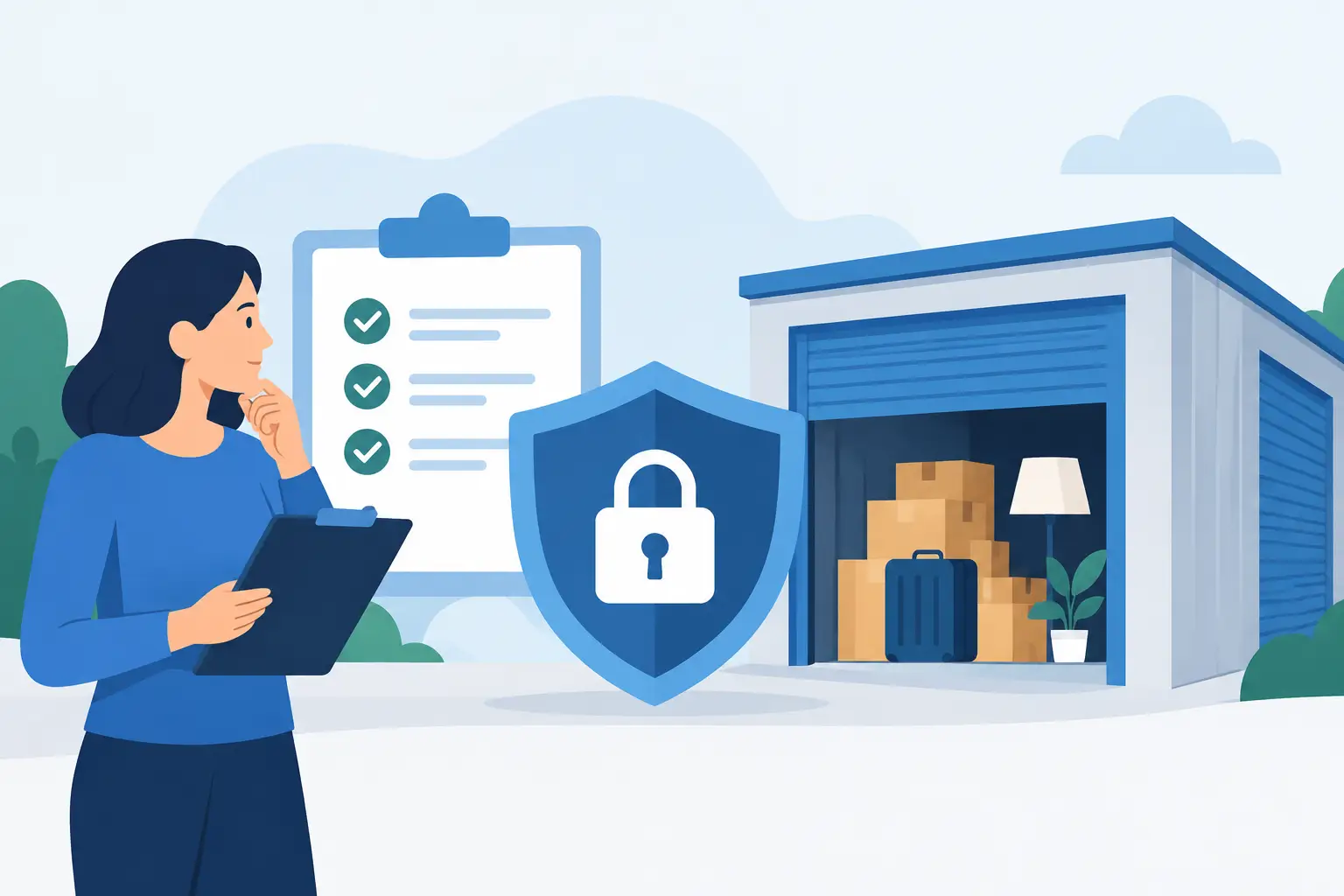
A quality lock is a smart first line of defense. It is not financial protection if something goes wrong.
Many people assume the moving or storage company will reimburse them for damaged or stolen contents. Often, the agreement says something very different. Storage providers commonly limit their responsibility, and the protection plan offered at checkout may not be a full insurance policy. It may have narrow covered causes of loss, exclusions that surprise you, low payout limits, or limits on what it pays for water-related damage.
Your renters or homeowners policy may offer some coverage for off-premises belongings, but that is not a guarantee. Deductibles can be high. Limits for property away from home can be lower than you expect. Some policies treat belongings in a storage unit or mobile container differently, and filing a claim could affect your broader insurance history. Read the policy or ask your insurer directly before relying on it.
The goal is simple: know the difference between a facility’s protection plan and a real insurance policy before you need to use either one. Do not compare only the monthly price. Compare covered losses, exclusions, deductible, coverage limit, and whether flood and named storms are included. A cheap plan that excludes the event you are worried about is not a bargain.
Get the Coverage Limit Right
Your coverage limit should reflect the replacement value of everything in the unit or container, not the price of the container rental. Walk room by room and estimate what it would cost to replace what you are storing today. Furniture, appliances, TVs, computers, clothing, kitchenware, tools, and children’s items add up fast.
Be realistic about high-value property. If your container holds $15,000 worth of belongings, a $5,000 protection limit leaves a large gap. At the same time, do not overinsure a lightly packed container just because the available limit is high. Good coverage is matched to your actual exposure.
For customers who want straightforward protection built for stored belongings, SnapNsure offers real monthly insurance policies from an A-rated underwriter, with limits up to $25,000 per unit and protection that can include flood and named storms. That is a meaningful difference from many basic storage-provider plans, especially for a mobile container stored outside or at a remote yard.
Check Coverage Before the Container Leaves
Do not wait until the truck arrives or the container is already loaded. Ask these questions while you still have time to make a better decision: Does coverage apply during transport? Does it apply while the container is at your home and while it is at the provider’s facility? Are theft, fire, water damage, wind, flood, and named storms covered? What is excluded? What deductible applies? Is there a limit for electronics, jewelry, or collectibles?
Also confirm the address and unit details on your policy. If a container moves from your driveway to a storage yard, make sure your coverage is designed for that situation. Save the rental agreement, inventory, photos, and policy information together in cloud storage or an email folder you can access away from home.
Make Moving Storage One Less Thing to Worry About
The best moving day is not the one where everything fits. It is the one where you can close the container door knowing the load is stable, the important records are with you, and the financial risk is not sitting unprotected behind a padlock. Pack with care, read the fine print, and choose coverage based on what you would actually lose – not what the storage counter happens to offer.