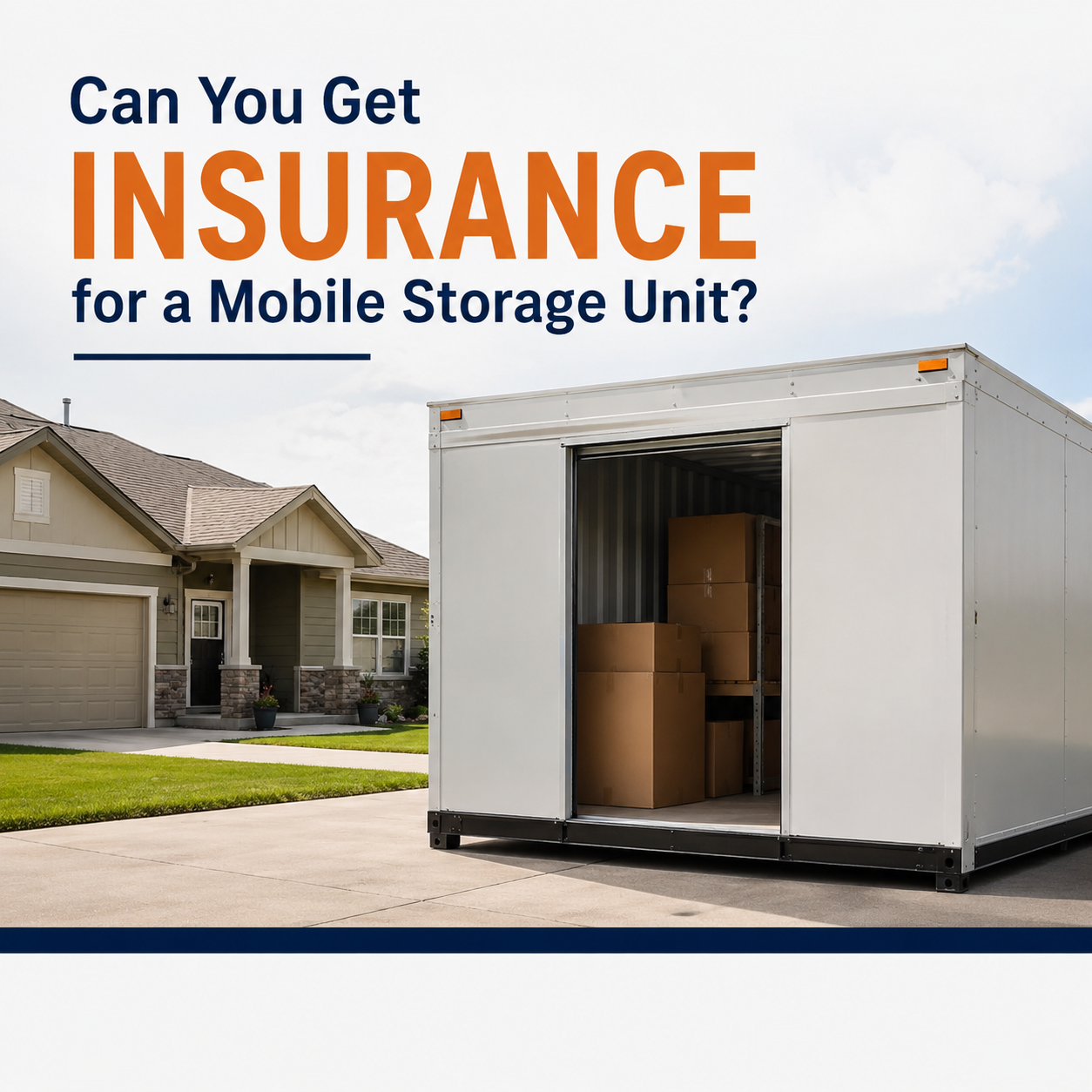
Quick Overview: Mobile storage units are convenient for moving and temporary storage, but they still face risks like weather damage, leaks, theft, and transport issues. This blog explains whether insurance is available for mobile storage units, how coverage works, and why many renters choose storage unit insurance for better protection during short-term and long-term storage situations.
Portable storage containers have become part of modern moving life.
People use them during renovations, apartment moves, temporary work assignments, downsizing, and even between college semesters. They are convenient because the container comes to you. You pack on your own schedule. Then the company moves or stores it later.
But there is one question many people forget to ask until much later: What happens if my stuff gets damaged while it’s inside the container?
That question usually shows up after heavy rain, a leak, smoke damage, or missing belongings. And honestly, many renters are shocked to learn that the storage company may not automatically pay for everything inside the unit.
That is why storage unit insurance from a trusted provider like SnapNsure has become such an important part of temporary storage today.
A Mobile Storage Unit Is Still a Storage Unit
A lot of people feel safer using portable storage because the container starts out near their home. But once belongings are packed inside, the risks are still very real.
Things can still happen during:
- Transportation
- Outdoor storage
- Severe weather
- Long-term storage
- Temporary relocation
Even a small amount of moisture inside a closed container can affect furniture, mattresses, electronics, clothing, and boxes surprisingly fast.
And because portable containers are often packed tightly, damage can spread quicker than people expect. One damp box can eventually affect multiple belongings nearby.
Most People Assume the Storage Company Covers Everything
This is probably the biggest misunderstanding renters have. People often think that the company owns the container, so they must cover the belongings too.” But that is not usually how storage agreements work.
In many cases, renters are responsible for protecting the items placed inside the unit. That means if there is storm damage, water intrusion, smoke damage, or theft, the storage company itself may not automatically reimburse everything.
Weather Can Become a Bigger Problem Than Theft
When people think about storage damage, they usually imagine break-ins first. But weather-related damage is actually one of the biggest problems for stored belongings.
Portable storage containers spend a lot of time outdoors. That means they can be exposed to:
- Heavy rain
- Windstorms
- Humidity
- Heat
- Roof leaks
- Changing temperatures
Moisture is especially tricky because people often do not notice the problem right away.
At first, everything may look completely normal. Then weeks later, renters open the container and notice:
- Soft cardboard boxes
- Damp smells
- Swollen wooden furniture
- Water stains
- Musty fabric
By then, the damage may already be spreading.
Temporary Storage Has a Funny Way of Becoming Long-Term
Temporary storage rarely feels temporary for long. What starts as a short-term plan during a move or renovation can easily stretch into months.
Life changes, schedules shift, and storage containers stay packed longer than expected. Meanwhile, belongings continue sitting through heat, storms, humidity, and changing weather conditions.
Many renters choose storage unit insurance early because it helps them feel more prepared if unexpected damage happens during that extended storage period.
So, Can You Actually Get Insurance for a Mobile Storage Unit?
Yes. Many renters choose storage unit insurance specifically designed for belongings stored inside portable containers and self-storage units.
Depending on the policy, coverage may help with situations involving:
- Fire
- Smoke damage
- Burglary with forced entry
- Certain types of water damage
- Windstorms
- Vandalism
The important thing to understand is this: The insurance is usually for the belongings inside the unit — not just the storage container itself. That difference matters a lot.
People Often Get Confused About Existing Insurance
This is where many renters start searching online late at night during moving week.
People commonly ask: Does homeowners insurance cover self storage units The answer depends on the insurance company, policy details, and storage situation. Some policies may include limited off-site protection for stored belongings. Others may have lower limits or exclusions.
That is why many renters prefer separate storage-focused coverage instead of assuming everything is automatically protected. It removes a lot of uncertainty later.
Why More Renters Choose Storage-Specific Insurance
Moving is already exhausting enough. There are boxes everywhere. Sleep schedules feel off. Half your belongings are missing. Everyone feels tired. The last thing people want is extra stress after discovering water damage or missing belongings inside storage.
That is why more renters now look for protection designed specifically for storage situations. Companies like SnapNsure focus on insurance for belongings stored inside storage units and portable storage containers.
Instead of using general coverage that may or may not apply, renters can choose protection designed for the way storage actually works.
Storage Unit Insurance Helps With Peace of Mind
At the end of the day, storage insurance is really about reducing stress.
People use storage during major life transitions:
- Moving to a new city
- Renovating a home
- Temporary housing
- Downsizing
- College moves
- Job relocation
Those situations already feel overwhelming enough.
Storage unit insurance cannot stop storms or accidents from happening. But it may help renters feel more prepared if something unexpected affects their belongings.
Some renters also compare renters insurance for storage units while looking at storage-specific coverage options before moving day. Others researching self storage facility insurance are often really trying to understand how to better protect the belongings inside the unit itself.
That growing awareness is actually a good thing. Because most people never think about storage damage — until it happens to them.
Why Renters Trust SnapNsure During Moves and Storage
When people put their belongings into storage, they want to feel like those items are actually protected — not just sitting behind a locked door. That is one reason many renters choose SnapNsure during moves, renovations, and temporary life changes.
Policies are underwritten by The Hartford, which has provided insurance solutions for more than 200 years and holds an A+ rating. SnapNsure is licensed nationwide, and pricing stays the same across the country, even for climate-controlled units.
Some things renters often like include:
- Coverage up to $25,000 per unit
- No higher premiums for climate-controlled units
- Simple online policy management
- Coverage built specifically for storage units
Don’t Wait for Damage: Think About Storage Protection First
Most renters do not think about insurance while carrying boxes into a storage container. They are focused on moving trucks, deadlines, paperwork, and just getting through a busy week. But once the container is packed and locked, things are no longer fully in your control.
Storms can come without warning. Moisture can build up quietly. Small leaks can stay hidden for weeks before anyone notices. That is why preparation matters so much. Thinking about protection before damage happens is always easier than dealing with stress later.
If you want peace of mind while your belongings are in storage, SnapNsure makes it easy. Just visit the website and grab a free quote in minutes.
FAQs
1. What does mobile storage unit insurance usually cover?
Coverage can vary, but it often helps protect against risks like fire, smoke damage, certain water damage, theft with forced entry, windstorms, and vandalism while items are inside the storage container.
2. Do I really need insurance for a short-term storage unit?
Even short-term storage can carry risks. Many renters use insurance because delays happen often, and belongings sometimes stay in storage much longer than expected.
3. Is mobile storage covered by self storage facility insurance?
Some self storage facility insurance plans may include protection for stored belongings, but coverage is usually limited. That’s why many renters look at separate third-party options for broader protection.
4. When should I buy insurance for a mobile storage unit?
The best time is before you load your belongings. Once items are packed and the container is locked, risks like weather, moisture, and leaks are already in play.
5. Can SnapNsure help with mobile storage insurance?
Yes. SnapNsure offers storage-specific insurance options designed for belongings stored in self-storage units and mobile containers. This makes it easier for renters to protect items during moves and temporary storage.