
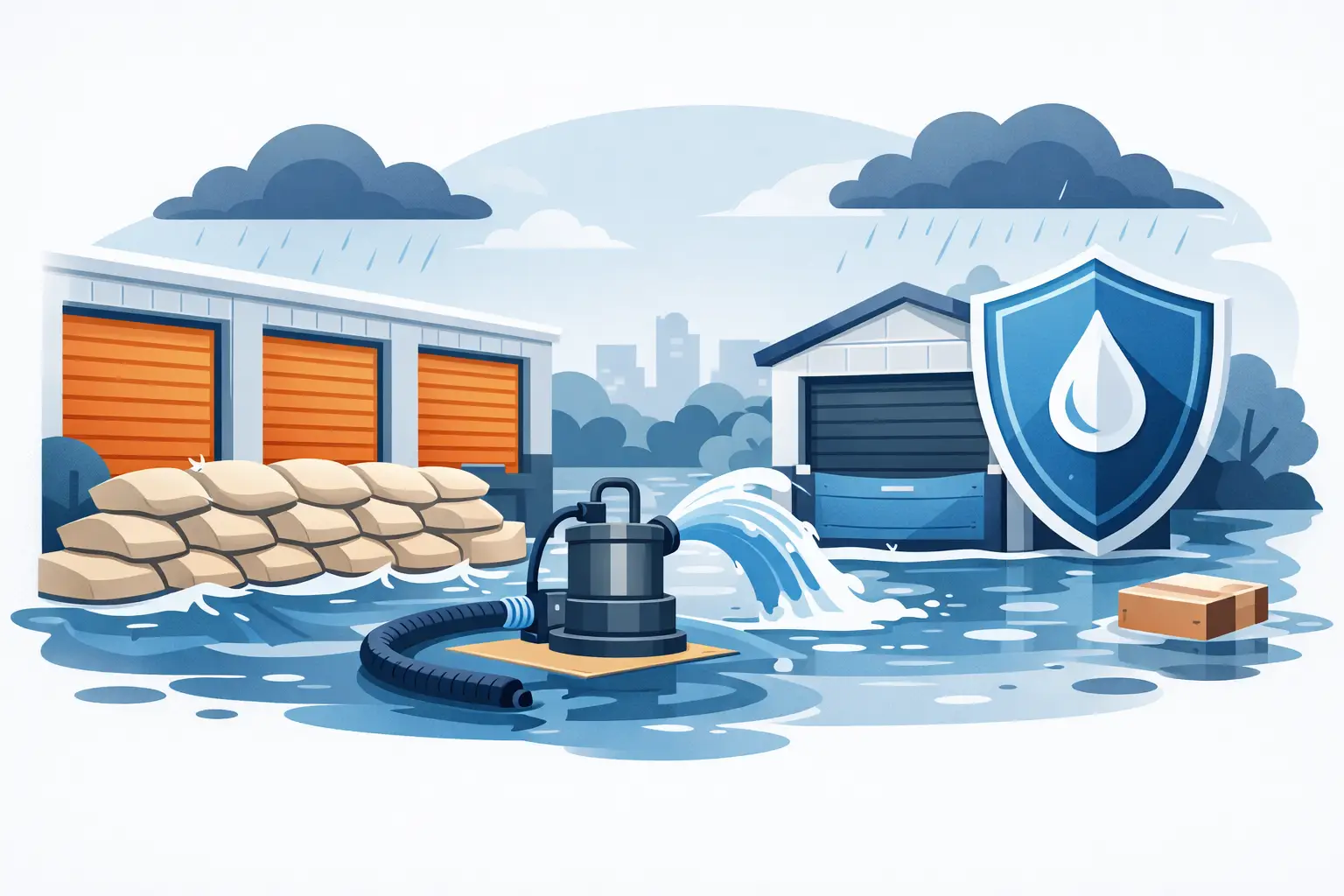
A storage unit can look perfectly safe right up until water finds its way in. Heavy rain, drainage failures, overflowing waterways, burst pipes, and named storms can turn a few inches of water into a major loss. That is why flood protection for storage units should never be an afterthought, especially when the unit holds furniture, family keepsakes, electronics, business inventory, or the contents of your home during a move.
A padlock protects against unauthorized entry. Plastic bins can help with minor moisture. Neither replaces insurance that is designed to respond when a covered water-related loss damages what you own. If your belongings matter enough to store, they matter enough to protect properly.
Flood Protection for Storage Units Starts Before Weather
Most people discover the limits of their protection after the damage is done. They assume the storage facility covers their contents, or they buy the protection plan offered at move-in because it is fast and convenient. But convenience is not the same as meaningful coverage.
Many facility-sold plans are limited protection programs, not full insurance policies. Their exclusions, low payout caps, and narrow water-damage terms can leave customers exposed when they need help most. Flood and named storm losses are especially worth checking. They are often treated differently from ordinary water damage, and they may be excluded altogether.
The smart move is simple: read what is covered before a weather alert, a seasonal storm, or a plumbing failure puts your belongings at risk. A policy that clearly includes the risks you care about is far more valuable than a low-priced plan that disappears when you file a claim.
A Raised Tote Is Not a Flood Plan
Good storage habits reduce risk. They do not eliminate it. Elevating boxes off the floor, using watertight bins, and avoiding ground-level units in known flood-prone areas are practical steps. They can limit damage from a small leak or a shallow intrusion. But a serious flood can overwhelm even a carefully packed unit.
Start with the unit itself. Ask where it sits on the property, how water drains around the building, whether the facility has a history of flooding, and whether exterior doors are sealed and maintained. For mobile storage, ask where the container will be parked and whether the location is vulnerable to standing water or storm surge.
Then pack like water may get in anyway. Four decisions can make a real difference:
- Keep furniture, boxes, and electronics elevated on pallets, shelving, or sturdy risers.
- Use sealed plastic totes for photos, documents, clothing, and other moisture-sensitive items.
- Place mattresses, upholstery, and wood furniture in protective covers, but do not mistake covers for waterproofing.
- Photograph your contents and save receipts or appraisals for higher-value belongings.
That last step matters more than people think. A detailed inventory makes it easier to understand how much coverage you need and gives you a clearer record if you ever have to report a loss. Walk through the unit with your phone, open a few boxes on camera, and keep the file somewhere other than the storage unit.
Why Facility Protection May Fall Short
Storage operators sell protection plans because customers want a fast answer at the counter. The problem is that a quick yes can hide a complicated policy. The plan may have a low maximum payout, limited categories of covered property, exclusions for weather events, or restrictions that do not match the value of what you stored.
Do not judge protection by the monthly price alone. A plan can look inexpensive until you compare the limit with the actual replacement cost of your belongings. One bedroom set, several electronics, and a few boxes of household goods can add up faster than expected.
Ask direct questions before you buy: Does the coverage include flood? Does it include named storms? What is the maximum amount paid per unit? Is there a deductible? Are there special limits for jewelry, collectibles, documents, or business property? If the answers are vague, keep looking.
Real insurance coverage is built for these questions. It gives you a policy, defined terms, and a clear path for understanding what is protected. That is a major difference from relying on a basic in-house protection plan that may be designed with more limitations than you expected.
Insurance Is the Financial Backstop
Physical precautions help protect your property. Insurance protects your finances when precautions are not enough. The right storage contents policy can help cover a broad range of covered losses, including flood and named storm damage, subject to the policy terms, limits, and deductible you select.
Coverage limits deserve close attention. Do not pick a number based on what fits in the unit. Pick a number based on what it would cost to replace what is inside. A 5-by-10 unit packed with personal property may be worth far more than it looks. Larger units, long-term storage, and household moves often need higher limits.
For people storing the contents of a home, higher limits can be the difference between partial help and meaningful recovery. Options up to $25,000 per unit give many customers more room to insure what they actually own instead of settling for a low cap that only covers a fraction of the loss.
Mobile Storage Has Its Own Risks
PODS, PackRat, Mobile Mini, Clutter, valet storage, and similar services offer flexibility, but the container may spend time in places a traditional storage unit does not. It may be parked in a driveway during a renovation, held at a staging yard, or transported between locations. Water exposure can change with every stop.
That makes insurance details even more relevant. Do not assume a policy for a fixed self-storage unit automatically works the same way for mobile storage. Confirm that the policy applies to your storage arrangement and ask how coverage works while the container is stored or moved.
The good news is that you do not have to pay premium prices for thin protection. SnapNsure offers a real insurance policy through an A-rated underwriter, with coverage designed for both traditional and mobile storage customers. It is built for people who want stronger protection, higher limits, and the chance to save up to 50% compared with competing storage-provider offerings.
Compare Coverage Before You Pay
The best time to compare policies is before you enter payment information at the storage office. Put the options side by side and focus on the details that matter: covered causes of loss, flood and named storm terms, coverage limit, deductible, exclusions, and monthly cost.
A lower price is only a win if the policy still gives you the protection you need. On the other hand, paying more through a storage provider does not automatically mean you are getting better coverage. That is why comparing the actual policy terms matters.
Look for a straightforward online process, clear coverage choices, and the ability to get insured without a long phone call or confusing paperwork. Insurance should not be another stressful task on moving day.
Get Covered Before the Forecast Changes
Flood risk is not limited to coastal communities or headline-making hurricanes. A sudden downpour, a clogged drain, or water moving across a parking lot can create a costly problem with very little warning. Once water is inside the unit, it is too late to rethink the plan you bought.
Take photos, elevate what you can, check your current protection, and get a quote for coverage that does not leave flood protection to chance. Your stored belongings are out of sight. They should not be out of mind.