
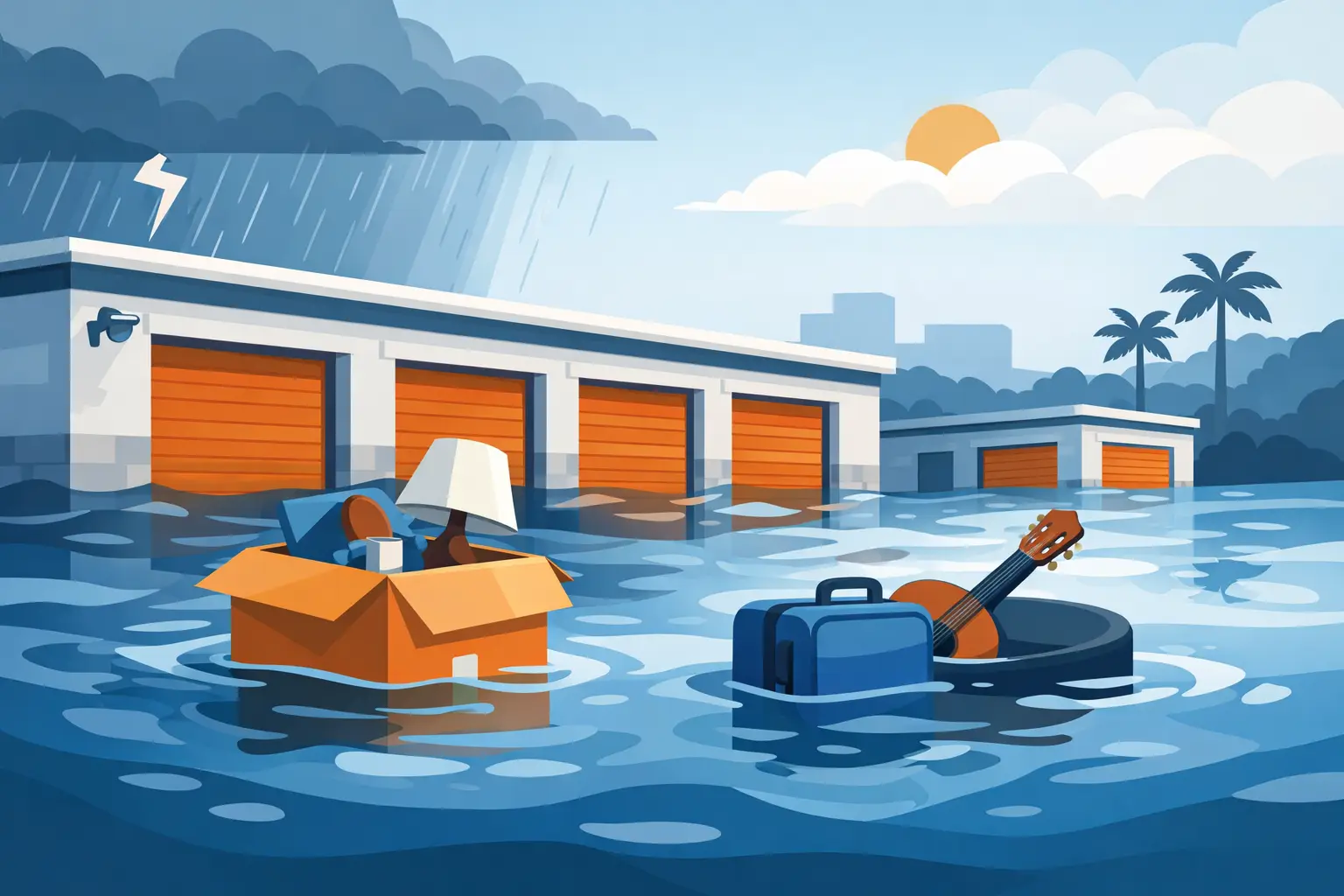
Water damage is one of the fastest ways to turn a storage bill into a much bigger loss. If you are paying for a unit or a portable container, flood coverage for storage unit contents is not a minor detail. It is one of the first things to check, because many storage protection plans either limit it, exclude it, or define it so narrowly that customers do not realize the gap until after the damage is done.
That is the problem with a lot of storage coverage sold at the counter. It can sound simple, cheap, and convenient. Then a heavy storm hits, standing water enters the unit, or a named storm pushes rain and floodwater into a container, and suddenly the fine print matters a lot. If your belongings are in storage during a move, renovation, deployment, downsizing, or college transition, you need to know exactly what kind of protection you are buying.
Why flood coverage for storage unit contents matters
People tend to think about theft first. Fair enough. But water is relentless. It can ruin furniture, mattresses, boxes of clothing, documents, electronics, keepsakes, and business property in a matter of hours. Flooding is not limited to homes near the coast, either. Inland storms, drainage failures, flash flooding, and overflowing lots can all create the same result – soaked, warped, mold-damaged property that may be impossible to restore.
Storage customers are especially exposed because they are often storing things during unstable moments. Maybe you are between homes. Maybe your container is sitting in a driveway while your house is under renovation. Maybe your unit is packed tighter than usual because you needed quick extra space. Those situations make losses more likely to be expensive and harder to absorb.
That is why broad storage contents insurance can be a smarter buy than a basic storage-facility protection plan. Real insurance is built to insure personal property. Many in-house plans are built to limit the operator’s risk and keep enrollment easy. Those are not the same goal.
What flood coverage usually means – and where people get tripped up
Flood coverage is not always described the same way across providers. Some plans may cover certain kinds of water damage but exclude actual flood. Others may mention storms but not cover surface water, rising water, storm surge, or water entering from outside the structure. That difference matters.
A customer may assume any storm-related water damage is covered. Not necessarily. The real question is what event caused the water intrusion and how the policy defines covered loss. If a policy only covers a burst pipe inside a building, that does not help much when your storage unit takes on water after severe weather.
The same issue comes up with mobile storage. A container may be on-site at your home, in transit, or at a warehouse. Coverage can vary based on location, handling, and the source of damage. If flood and named storm protection are not clearly included, you may be paying for coverage that disappears right when you need it most.
The difference between real insurance and basic protection plans
This is where many storage customers overpay for less protection. Storage operators often sell protection plans that are framed as simple add-ons. They may be cheaper at first glance, or they may just get bundled into your rental process so you do not stop to compare. But a protection plan is not always a true insurance policy.
That distinction matters because real insurance generally offers clearer policy terms, stronger claims structure, and broader covered causes of loss. A limited protection program may come with narrow caps, exclusions for water-related events, or rules that make claims harder than expected.
If you want flood coverage for storage unit contents, do not settle for vague language. Ask the direct question: Is flood covered, and under what conditions? If the answer gets fuzzy, that tells you something.
What to look for before you buy
Start with covered causes of loss. You want to know whether flood, named storm, and other serious weather events are actually included. Not hinted at. Included.
Next, look at coverage limits. A lot of people underestimate what is sitting in storage. One bedroom of furniture, electronics, kitchen gear, seasonal items, and personal keepsakes can add up fast. If the plan tops out at a low number, flood coverage may exist on paper but still leave you far short after a real loss.
Then check whether the policy covers traditional self-storage and mobile storage. That matters if you are using PODS-style containers, valet storage, or portable units during a move. Some plans are built around fixed units only.
It also helps to review deductibles, excluded property categories, and claim documentation requirements. No policy covers everything, and pretending otherwise does not help anyone. High-value jewelry, cash, vehicles, or certain business items may be limited or excluded. The key is knowing the trade-off before you sign up, not after.
Flood coverage for storage unit renters using portable containers
Portable storage is convenient, but it creates its own coverage questions. A container may sit outside for days or weeks. That means direct exposure to rain, pooling water, ground saturation, and severe storms. If the container is moved, there is another layer of handling and transit risk.
That is why portable storage users should be even more careful about flood and storm language. The coverage needs to match how the container is actually being used. If a plan is designed for contents inside a fixed indoor unit at a facility, it may not be the right fit for a container parked at your property.
For customers in storm-prone states, this is not theoretical. It is practical planning. One bad weather event can destroy months or years of stored property value. Paying for weak coverage just because it was offered at checkout is a costly shortcut.
Why the cheapest monthly option is not always the cheapest choice
A lot of storage customers are price-conscious, and they should be. But there is a big difference between affordable coverage and bargain-bin protection. If a plan is cheap because it excludes the losses you are most worried about, it is not really saving you money.
The better question is value. How much protection are you getting for the monthly cost? Is it real insurance from a reputable underwriter? Does it cover meaningful risks like flood and named storms? Can you choose higher limits if your stored property is worth more than the default amount?
That is where comparison matters. A stronger policy at a lower monthly price is the sweet spot. And yes, that exists. Some direct-to-consumer storage insurance options are built specifically to beat the facility-sold model on both price and coverage. That is exactly why many customers switch after they finally read what their current plan does not cover.
Common mistakes people make with storage flood coverage
The first mistake is assuming the storage facility is responsible for the contents. Usually, it is not. The facility may provide the space, but your property is still your responsibility unless there is proven negligence and even then, that is not a quick or simple path.
The second mistake is assuming homeowners or renters insurance fully covers property in storage. Sometimes there is limited off-premises coverage, but it may be capped, restricted, or subject to exclusions that make it a poor substitute for dedicated storage insurance. It depends on the policy.
The third mistake is buying based only on the monthly number. A low fee is easy to say yes to. A denied or reduced claim is much harder to live with.
How to choose the right policy without overcomplicating it
Keep it simple. Ask three questions. Does it cover flood and named storms? Are the coverage limits high enough for what I actually have in storage? Is this a real insurance policy, not just a basic protection plan?
If the answer to any one of those is no, keep looking. You are not being picky. You are trying to avoid paying for false confidence.
For many storage customers, the best option is a monthly policy that is easy to buy online, lets you pick the right limit, and gives broader protection than the plan sold by the facility. That is especially true if you are using both traditional self-storage and mobile storage over time. Flexibility matters. So does cost.
SnapNsure is built around that exact gap in the market – stronger storage contents insurance, flood and named storm protection, higher limits, and pricing that can save customers 50% or more compared with overpriced facility plans. If your current coverage feels vague, expensive, or too limited, that is your cue to get a quote and compare.
Stored belongings are still valuable belongings, even when they are behind a roll-up door or inside a container. If water gets in, the damage is real just the same. Choose coverage that treats it that way.