
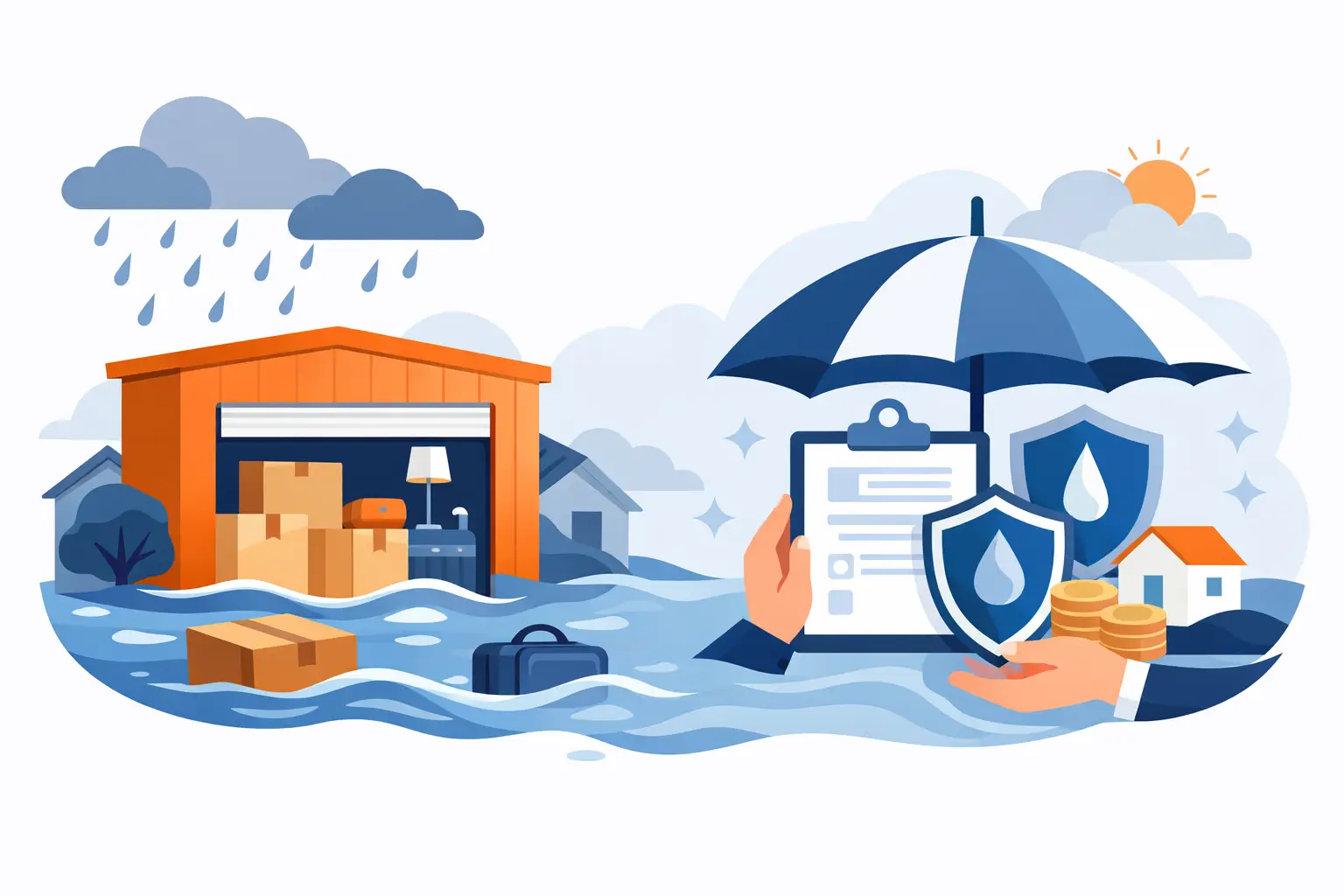
A lot of people find out what their storage coverage really does only after water gets into the unit. By then, the boxes are soaked, the furniture is swelling, and the fine print suddenly matters. That is exactly why storage insurance for flood damage deserves a closer look before you trust your belongings to a facility, container, or mobile unit.
Flood loss is one of those risks people assume is covered somewhere. Maybe by the storage facility. Maybe by a homeowners policy. Maybe by renters insurance. Sometimes that assumption works out. Often, it does not. And when it does not, you are left paying for damaged belongings out of pocket while the facility points back to its agreement.
Why storage insurance for flood damage matters
Water damage in storage is not rare, and it is not always dramatic. Yes, there are major flood events and named storms. But losses also happen when heavy rain overwhelms drainage, groundwater seeps into lower-level units, or a mobile container sits in standing water longer than expected. Stored property is especially vulnerable because it stays unattended for long periods. A problem can start small and get much worse before anyone notices.
That is where people get tripped up. They hear the words protection plan and assume it works like insurance. In many cases, it does not. A facility-backed plan may be limited, may cap payouts at a lower amount than you need, or may exclude certain causes of loss entirely. Flood can be one of the biggest gaps.
If you are storing furniture during a move, business equipment during a renovation, or family belongings while downsizing, that gap can get expensive fast. Replacing a unit full of mattresses, electronics, clothing, and household items is not cheap. Even a moderate loss can run into thousands of dollars.
What flood damage coverage usually means
When people talk about flood damage, they often mean any kind of water in the unit. Insurance language can be more specific. Some policies separate flood from other forms of water damage. Others may cover named storms, rising water, or weather-related events under defined terms and conditions.
That distinction matters. A leak from above is not always treated the same way as rising water from below. Damage from a hurricane may be addressed differently from damage caused by poor drainage after a storm. The point is simple: you should not assume all water losses are handled the same.
Real storage contents insurance is generally the stronger play because it is designed as an actual insurance policy, not just a basic reimbursement promise. That can mean broader covered causes of loss, higher limits, and clearer claims handling. It can also mean better protection for mobile storage options like PODS, PackRat, Mobile Mini, Clutter, and valet storage, where standard facility offerings may be even more limited.
The biggest misconception about facility protection plans
The sales pitch at the front desk often sounds easy. Add the plan. Pay the monthly fee. Your stuff is protected. But easy is not the same as strong.
Many storage operator plans are built to protect the facility relationship first, not the customer first. They can come with lower coverage limits, more restrictions, and narrower protection than people expect. That does not mean every facility plan is bad. It means you need to compare what it actually covers against what you are paying for.
If flood or named storm damage is excluded, your monthly payment may be buying less protection than you think. If the plan only covers a small amount per unit, it may not come close to replacing what you have stored. And if you are using a portable container or moving your belongings between locations, those limitations can become even more obvious.
This is where a direct-to-consumer policy stands out. A real insurance policy from an A-rated underwriter is built around the contents you care about, not around selling you the bare minimum at move-in.
What to look for in storage insurance for flood damage
Start with the obvious question: is flood actually covered? Do not settle for vague language. If the policy covers flood, named storm, or other water-related events, that should be clearly stated.
Next, look at the coverage limit. Too many people insure a packed storage unit for a number that sounds good until they think through replacement cost. Add up mattresses, couches, dining sets, seasonal gear, clothing, TVs, tools, decor, and sentimental household basics. A small unit can hold far more value than expected. Higher limits matter.
Then consider the type of storage. Traditional self-storage and mobile storage do not always carry the same risk profile. A container in transit or parked on a property may face different exposures than a climate-controlled unit in a multi-story building. The policy should fit the way you are actually storing your belongings.
Price matters too, but not in isolation. Paying less for weak coverage is not a deal. Paying less for broader protection is. That is why so many savvy storage customers are moving away from overpriced operator plans and toward independent coverage that can save 50% or more while offering stronger protection.
Who needs this kind of coverage most
If you are storing low-value items you can easily replace, you may decide minimal coverage is enough. But for most people, that is not the reality.
Storage insurance with flood protection makes the most sense for people in transition. Movers, military families, college students, homeowners between closings, people remodeling, and families helping a relative downsize all tend to put a lot into storage quickly. In those moments, convenience matters, and that is when people are most likely to accept the default plan without reading it carefully.
It also matters for anyone using mobile storage. Portable units are convenient, but they can be exposed to weather in ways customers do not always consider. If your container is on a driveway, at a jobsite, or being moved during a storm season, you want to know your policy was built for real-world storage risks.
How to compare policies without getting lost in the fine print
You do not need to become an insurance expert. You just need to compare the few things that actually decide whether coverage will help when something goes wrong.
Check whether the provider is offering a true insurance policy or a limited protection plan. Verify flood or named storm coverage. Review the maximum limit per unit. Look at how easy it is to buy, manage, and update the policy online. And ask the practical question every buyer should ask: if my stored belongings are badly damaged, will this policy meaningfully help me recover?
That last question cuts through a lot of marketing language. A cheap plan with major exclusions is not a smart buy. A policy that costs less and covers more is.
For customers who are tired of inflated storage-facility add-ons, this is where SnapNsure has clear appeal. It offers real self-storage contents insurance, broader protection that can include flood and named storm coverage, limits up to $25,000 per unit, and a simple online process that does not waste your time.
The smart move before storm season
The best time to fix a coverage gap is before the forecast turns ugly. Once water gets in, it is too late to wish you had read the policy more closely.
If your belongings are worth protecting, do not assume the facility already has you covered. Do not confuse a basic protection program with real insurance. And do not overpay for limited coverage just because it is offered at move-in.
Storage insurance for flood damage is not about buying more insurance than you need. It is about buying the right kind. Stronger coverage, higher limits, and lower monthly cost is not a complicated decision when the alternative is crossing your fingers every time it rains.
Take a few minutes, compare what you have, and make sure your storage coverage can actually stand up to water loss when it counts.