
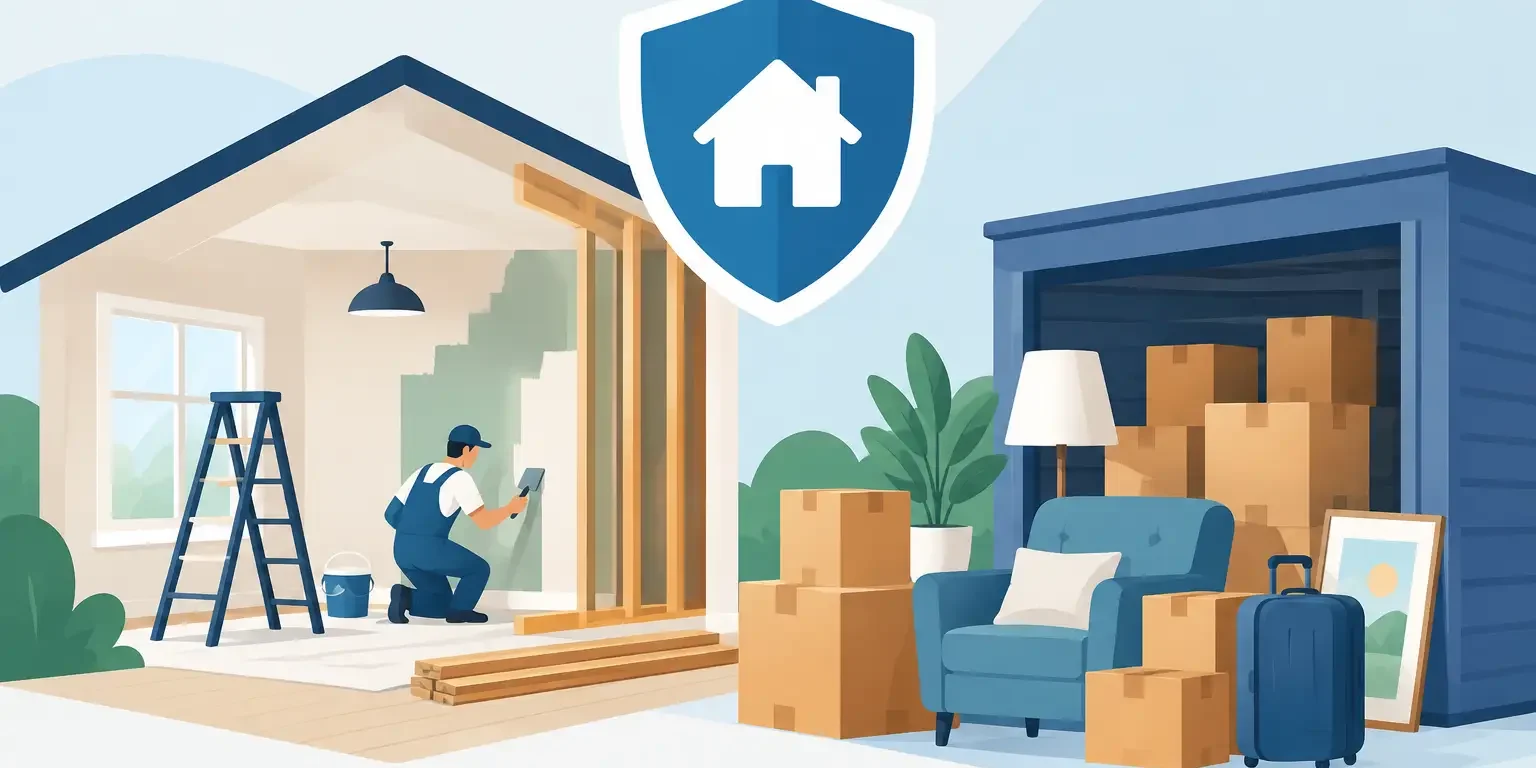
A renovation can turn a comfortable home into a construction zone fast. Furniture gets covered in dust, rooms are emptied, and the belongings you cannot fit in the garage end up in a self-storage unit or a mobile container in the driveway. Finding the best insurance for renovations is not just about protecting the house. It is about protecting the things you moved out of it.
That distinction matters. Your contractor may carry insurance for their work. Your homeowners policy may offer some off-premises coverage. Your storage facility may offer a protection plan at move-in. None of those automatically means your stored belongings have the broad, high-limit protection you expect.
Before you pay for a plan because it is convenient, take a closer look at what is actually covered, what is excluded, and how much it would cost to replace what is inside the unit.
The Best Insurance for Renovations Covers What You Moved
Renovation insurance is often discussed as coverage for the structure itself. That matters if you are doing major work, especially if the home will be vacant or the scope of work changes the risk. But for many households, the immediate exposure is personal property sitting away from home for weeks or months.
Think about what commonly goes into storage during a remodel: a sectional sofa, bedroom furniture, electronics, seasonal items, family keepsakes, books, kitchen equipment, tools, and boxes you have not opened in years. The value adds up faster than most people realize.
A facility’s basic protection plan can sound reassuring, but it may be a limited agreement rather than a real insurance policy. It may exclude major events, cap certain losses, require specific conditions, or provide far less protection than the value of your contents. The cheapest-looking option is not a bargain if it leaves you paying out of pocket after a covered event you assumed was included.
The right policy focuses on the contents in storage and gives you a clear coverage limit. It should also work whether your belongings are in a traditional self-storage unit, a portable container, or a valet-storage arrangement.
Why Homeowners Insurance May Not Be Enough
Many homeowners assume their existing policy takes care of belongings wherever they are. Sometimes it provides limited protection for property away from the residence, but the details are what count.
Off-premises limits can be lower than the amount of coverage you have at home. Certain causes of loss may be restricted. Deductibles can make smaller claims impractical. And if the home is under significant renovation, vacant for a period, or subject to changes your insurer needs to know about, relying on assumptions can create an expensive surprise.
Renters insurance may also provide some off-premises protection, but the same questions apply. How much coverage is available for property in storage? Are losses from water, flooding, wind-driven rain, or a named storm addressed? Does the policy cover a mobile storage container while it is being stored or transported? Can you comfortably absorb the deductible?
There is no single answer for every household. A modest renovation with a few boxes in a nearby unit may call for a different limit than a full-home remodel that sends nearly every room into a PODS-style container. The point is simple: check the actual policy language before deciding you are already covered.
What Strong Storage Coverage Should Include
When comparing coverage for belongings during a renovation, do not stop at the monthly price. Compare the protection behind it. A good policy should make it easy to see the coverage limit, deductible, covered causes of loss, and exclusions.
Look closely at these four areas:
- Coverage limits: Add up the approximate replacement cost of what you are storing. A $2,000 limit may not go far once furniture, electronics, and household goods are involved. Higher limits can be especially valuable for whole-home renovations.
- Water and weather protection: Water damage is not all the same. Ask whether the policy addresses flood and named storm losses, rather than assuming every water-related event is covered.
- Storage type: Traditional self-storage, portable containers, mobile storage, and valet storage do not always have identical protection options. Make sure the policy fits where your property will actually be.
- The insurer behind the policy: A real insurance policy from a highly rated underwriter offers a different level of confidence than a facility-operated protection plan with narrow terms.
Also ask about category limits. Jewelry, fine art, collectibles, cash, business inventory, and high-value specialty items can have restrictions or require separate coverage. Being direct about what you are storing is better than discovering a limitation after a loss.
Replacement Cost Matters More Than Sentimental Value
Insurance cannot replace the sentimental meaning of a child’s artwork, old photographs, or a family heirloom. It can, however, help you replace the everyday property that makes a home functional after a loss.
Make a quick inventory before packing. Take photos or video of each room, photograph serial numbers on electronics, and save receipts for larger purchases if you have them. This is not busywork. It gives you a clearer picture of the limit you need and can make a future claim less stressful.
Do not insure based on what you originally paid for everything years ago. Estimate what it would cost to replace comparable items now. Furniture, appliances, and electronics can be significantly more expensive than expected.
Do Not Let a Storage Facility Choose for You
Storage operators often present their plan at the counter or during online checkout. That can make it feel like the default choice. It is not the only choice, and it may not be the best value.
Convenience is useful, but convenience does not equal broad coverage. Read whether the offering is insurance or a contractual protection plan. Ask about flood, named storms, mold, water damage, theft requirements, and maximum payouts. If the answers are vague, that is a reason to compare options before agreeing.
Independent storage contents insurance can give consumers more control. Instead of accepting a plan built around the facility’s program, you choose a limit based on your belongings and evaluate the coverage on its own merits. That is especially useful when you are using mobile storage, where the container may be at your home one week, in transit the next, and stored at a warehouse after that.
SnapNsure offers monthly storage contents insurance designed for traditional and mobile storage customers, with coverage limits up to $25,000 per unit and protection options that can include flood and named storm coverage, subject to policy terms. It is built for people who want real insurance without paying inflated storage-provider prices.
How Much Coverage Do You Need During a Remodel?
Start with the contents, not the size of the storage unit. A 10-by-10 unit filled with basic household goods might need a modest limit. The same unit filled with quality furniture, a home office, televisions, and appliances may need much more.
Walk through your home and identify what will leave the house. Create a rough replacement-cost total, then choose a limit with enough room for items you may add later. Renovations often expand beyond the original plan, and storage units have a way of collecting more than expected.
The deductible deserves equal attention. A higher deductible can lower the monthly cost, but it also means more out-of-pocket expense if you file a claim. For a short renovation, a low monthly premium may be appealing. For a longer project or a unit packed with valuable property, stronger coverage may be worth the difference.
Buy Before the First Box Leaves the House
Do not wait until the container is delivered, the movers arrive, or the renovation crew starts demolition. Get coverage in place before your belongings enter storage, confirm the effective date, and keep your policy information with your inventory.
Then pack smart. Use sturdy boxes, label them clearly, keep items off the floor when possible, and avoid storing prohibited or highly sensitive items without confirming coverage. Insurance is there for unexpected loss, not as a substitute for basic care.
A renovation should end with a better home, not a costly lesson about weak storage protection. Choose coverage based on what you own, where it will be stored, and the risks you are not willing to carry yourself. A few minutes spent comparing real insurance can protect months of planning, packing, and investment.