
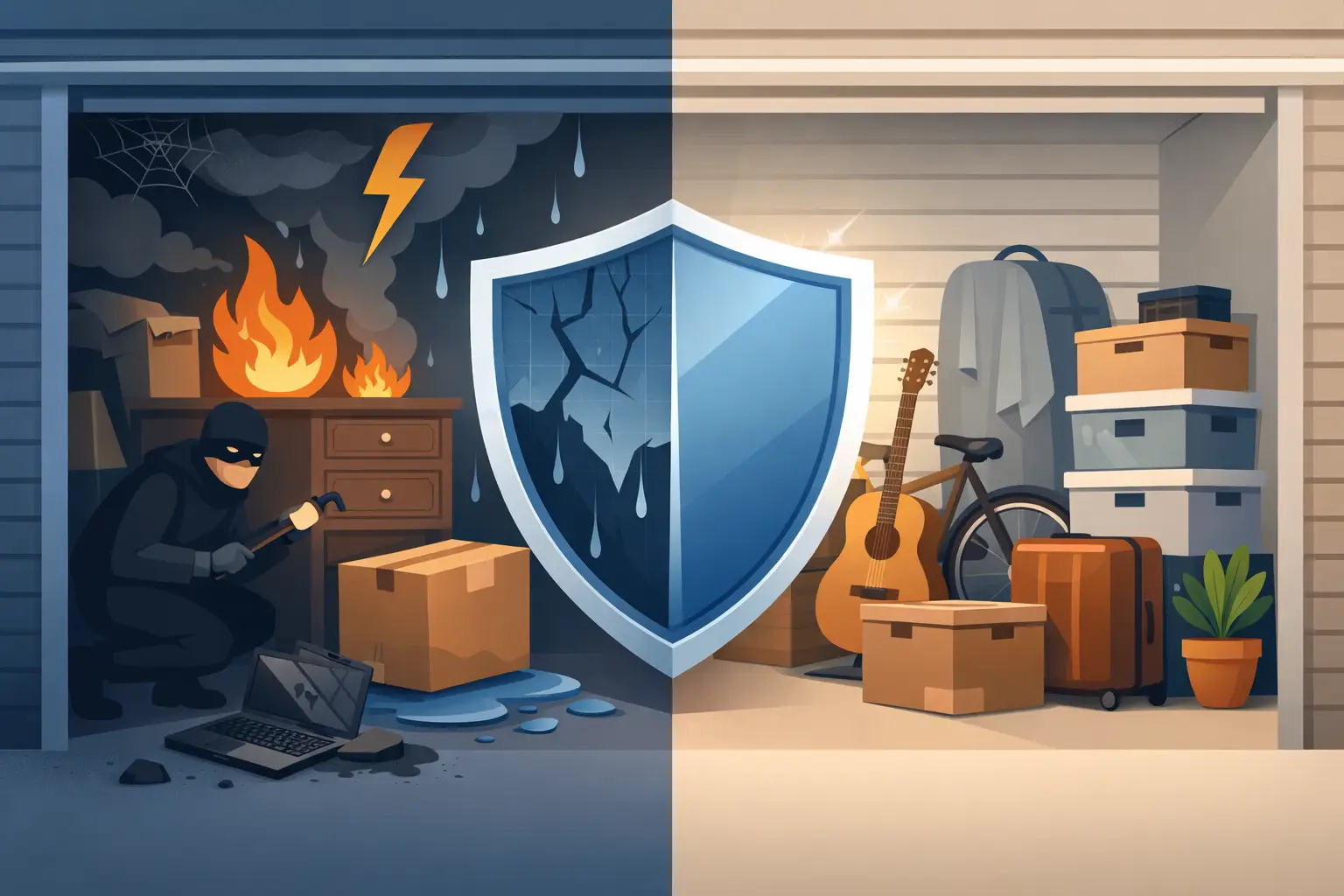
The fastest way to get disappointed by a storage claim is to assume every problem is covered. Knowing what storage insurance does not cover before you pack the unit helps you avoid expensive surprises, store smarter, and buy protection based on real risks instead of a vague promise of “coverage.”
A storage facility’s protection plan may sound reassuring at checkout. But it may not be a full insurance policy, and even a true policy has exclusions, limits, and responsibilities you need to understand. The goal is not to find a policy that covers every imaginable event. That policy does not exist. The goal is to know the gaps, protect against the losses that matter most, and avoid paying too much for thin coverage.
What Storage Insurance Does Not Cover Most Often
Exact exclusions vary by policy, insurer, storage provider, deductible, and the coverage options you choose. Read the actual policy documents, not just the one-line description on a rental agreement. Still, several exclusions show up again and again.
Normal wear, age, and gradual damage
Insurance is built for sudden, accidental losses – not the slow decline of property over time. A couch that fades, electronics that stop working from age, or a wooden table that warps after months of poor packing is generally not a covered claim.
The same rule often applies to rust, corrosion, mildew, mold, dry rot, and deterioration. If moisture gradually builds up in a unit and damages clothing or furniture, coverage may depend on the cause, the policy wording, and whether there was a sudden covered event. A known leak left unaddressed is very different from a sudden pipe burst.
This is why a clean, dry unit and proper packing still matter. Use plastic bins where appropriate, keep belongings off the floor on pallets or shelving, and avoid sealing damp items in boxes. Insurance is your financial backstop, not a substitute for basic storage habits.
Damage caused by insects, rodents, or animals
Rodent and pest damage is one of the most frustrating storage problems because it can be extensive and deeply personal. Unfortunately, it is commonly excluded. Chewed boxes, ruined fabric, droppings, nests, and insect damage may fall outside storage insurance coverage, particularly when the damage develops over time.
Before moving in, inspect the unit. Look along walls and corners, check the door seal, and ask the facility how it handles pest control. Then visit periodically. A unit that sits unopened for a year can hide a problem until the damage is severe.
Property that should not be stored
Most policies exclude property that is illegal, dangerous, perishable, or prohibited by the storage agreement. That can include food, plants, live animals, gasoline, propane tanks, fireworks, ammunition, hazardous chemicals, and other flammable or explosive materials.
These exclusions are not fine-print gotchas. They exist because those items can create serious loss for you, neighboring renters, and the facility. If an item should not be in the unit, do not assume insurance will rescue you when something goes wrong.
Cash is another major exception. Currency, coins, precious metals, and similar items often have low limits or no coverage at all. The same can be true for irreplaceable records, manuscripts, business papers, and digital files. Store vital documents and backups somewhere more secure than a rented unit.
High-value items above the policy limit
A policy limit is not a suggestion. If you choose $5,000 in contents coverage but have $12,000 worth of belongings in storage, the policy cannot pay more than its stated maximum, even after a legitimate covered loss.
Certain categories may also have special sublimits. Jewelry, watches, fine art, collectibles, furs, firearms, and some electronics can have stricter limits than ordinary household goods. That does not automatically mean they are never covered. It means you need to ask the right question: “What is the limit for this category, and can I add coverage if needed?”
Photograph valuable belongings before storage and keep receipts, appraisals, serial numbers, and inventory records outside the unit. Claims move faster when you can show what you owned and what it was worth.
Coverage Gaps That Depend on the Policy
Some of the biggest misunderstandings are not universal exclusions. They are risks that one plan covers and another does not. This is where a cheap-looking facility plan can become expensive.
Flood, surface water, and named storms
Water damage is not one simple category. A burst pipe, roof leak, flood, storm surge, overflowing creek, and water entering under a unit door may be treated differently. Many basic storage protection plans exclude flood and may also limit storm-related losses.
If your unit is near a coast, river, low-lying area, or region with frequent severe weather, do not treat this as a minor detail. Ask directly whether flood and named storm losses are covered. Get the answer in the policy language, not in a verbal assurance at the counter.
Theft and unexplained disappearance
Theft is often covered only when there is evidence of forced entry or a documented break-in. If property simply goes missing and there is no sign of theft, an insurer may classify it as unexplained disappearance, which can be excluded.
Do your part to strengthen your position. Use a quality lock, keep a written inventory, photograph the unit when it is packed, and report a break-in to the facility and police immediately. Do not wait several weeks and hope you can reconstruct what happened later.
Damage while items are being moved
Your belongings face risk before they reach the unit and after they leave it. Storage contents insurance may cover property while it is stored, but not necessarily while movers are loading a truck, a portable container is in transit, or you are carrying a dresser down the stairs.
Mobile storage adds another layer. A container at your driveway, in transit, or at a warehouse may have different coverage conditions. If you are using a PODS-style container or valet storage, make sure the policy specifically applies to your storage setup and the phases of the move that matter to you.
Mechanical or electrical failure
If a refrigerator, television, computer, or appliance stops working due to internal breakdown, that is typically not a covered storage loss. Insurance generally responds to an outside covered event, such as fire or certain forms of accidental damage, rather than a product defect or mechanical failure.
For electronics, remove batteries before storage when possible. Batteries can leak, corrode devices, and create damage that may not be covered. Never store valuable electronics without climate considerations, protective packing, and an inventory.
Your Own Actions Can Affect a Claim
Even a covered cause of loss can become complicated if the policyholder failed to meet basic conditions. Intentional damage, fraud, dishonest statements, and losses caused by criminal acts are never a path to coverage. Nor is neglect.
For example, if you know the unit has a damaged door, repeatedly see water entering, or discover a rodent problem and do nothing, the insurer may question whether later damage was preventable. Policies can also require prompt notice of a loss, cooperation during the claims process, and reasonable steps to prevent further damage.
Keep your account current, too. Coverage that lapses because a payment was missed will not protect belongings after the fact. Monthly insurance is convenient, but it only works when the policy is active.
How to Buy Storage Coverage Without the Surprises
Do not compare storage insurance based on the monthly price alone. Compare the covered causes of loss, exclusions, deductible, policy limit, category sublimits, and whether the product is actual insurance or a facility-run protection plan with narrower terms.
Start by totaling the replacement cost of what you are storing. Be realistic. A unit full of furniture, clothing, tools, electronics, and kitchenware can add up faster than most renters expect. Then choose a limit that reflects that amount, rather than picking the lowest option to save a few dollars.
Next, match coverage to your risk. If weather is a concern, look closely at flood and named storm provisions. If you use mobile storage, confirm that your type of container and storage location qualify. If you have high-value property, verify special limits before assuming your standard policy amount solves the problem.
SnapNsure offers real storage contents insurance designed for fixed and mobile storage customers, with options that can include broader protection than many facility plans. The smarter move is simple: compare what is actually covered, what is excluded, and what you would pay out of pocket after a loss.
Your unit may be out of sight, but the value inside it should not be out of mind. Read the exclusions before you need them, pack like a loss is possible, and choose coverage that protects the belongings you would hate to replace.