
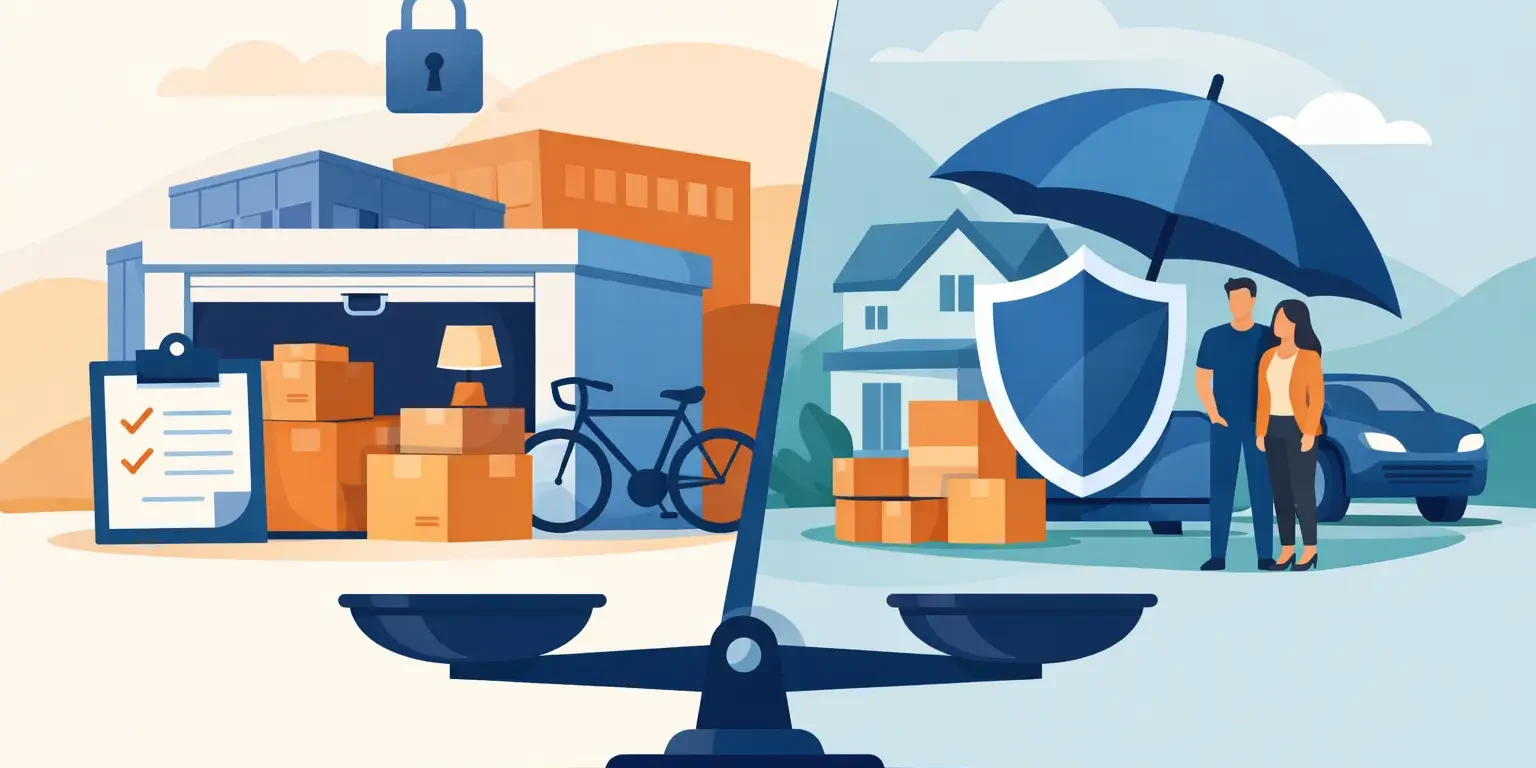
A storage facility can make protection sound like a small add-on at checkout. But the difference between a storage waiver versus insurance can become painfully clear after a fire, water loss, theft, or storm damages the things you trusted the facility to hold.
Your furniture, electronics, family photos, seasonal gear, and boxes of keepsakes deserve more than vague reassurance. Before you accept the facility’s protection plan, find out what it actually is, what it covers, what it leaves out, and whether the price matches the protection.
Storage waiver versus insurance: the real distinction
A storage waiver, often called a protection plan or tenant protection plan, is commonly sold by a storage facility or mobile-storage provider. It may reimburse you for certain losses under specific conditions. But it is not always an insurance policy, and the rules can be much narrower than customers expect.
Insurance is a policy issued by an insurance company and regulated as insurance. A dedicated storage contents policy is designed to protect the personal property inside your unit or mobile container, subject to its terms, limits, exclusions, and deductible. That structure matters when you need to make a claim.
The label alone does not tell the whole story. Some facility plans provide useful limited protection. Some insurance policies have exclusions you need to understand. The smart move is to read the actual terms instead of assuming every product called “protection” works the same way.
Why a waiver can cost more than it delivers
Storage operators have a business reason to offer protection at the counter: it is convenient, and many renters choose it without comparison shopping. Convenience is not the same as value.
A waiver may come with lower coverage limits, more restricted causes of loss, or conditions that reduce what you can recover. Certain plans may exclude flood, named storms, water damage, vermin, mold, or damage connected to moving and handling. Those gaps are not minor details when your storage unit contains the contents of a home.
Another issue is how value is calculated. Will the plan pay replacement cost, actual cash value after depreciation, or a limited amount per item? If a five-year-old television, computer, or sofa is damaged, the answer can make a major difference.
Then there is the price. A facility may charge a monthly fee that looks harmless on its own, yet adds up quickly over a long storage stay. Paying more for a plan with lower limits and narrower coverage is not a deal. It is simply an expensive default.
What real storage insurance may cover
A true storage insurance policy can provide broader protection for accidental, sudden losses affecting your stored belongings. Coverage depends on the policy you select, so no one should promise that every event or item is covered. Still, the right policy can give you far more confidence than a basic facility waiver.
Look closely at whether the policy addresses major risks that matter where you live and store. Fire and smoke damage are obvious concerns, but weather deserves equal attention. Flooding and named storms can be devastating, particularly in coastal states and storm-prone regions. If these losses are excluded, a low monthly price may not mean much when you need help most.
The same is true for mobile storage. A container may sit in a driveway, at a warehouse, or travel between locations during a move. That creates a different set of risks than a stationary unit. Customers using PODS, PackRat, Mobile Mini, Clutter, valet storage, and similar services should confirm that their contents protection follows the storage solution they are actually using.
Higher limits also matter. A unit can fill up fast: bedroom furniture, appliances, clothing, tools, hobby equipment, and electronics can easily total thousands of dollars. Choosing coverage based on a quick guess can leave you underinsured. Add up the approximate replacement value of what is inside, then select a limit that gives you room for reality.
Do not assume homeowners or renters insurance is enough
Your existing homeowners or renters policy may offer off-premises coverage for personal property. That can be helpful, but it is not a substitute for checking the details.
Policies often limit coverage for belongings kept away from your home. They may apply a separate deductible, which could be higher than the value of a small or moderate storage claim. Filing a claim can also affect your insurance history. For someone storing property for several months during a move, renovation, military deployment, or downsizing, a stand-alone policy may be a cleaner and more practical choice.
Call your current insurer if you are unsure, but ask direct questions. How much storage coverage do you have? Which losses are covered? Are flood and named storms included? What deductible applies? Is a mobile container covered while it is being moved or stored at a warehouse? General answers are not enough.
How to compare storage protection without getting lost in fine print
Start with the coverage limit. Estimate what it would cost to replace everything in the unit, not what you paid for it years ago. If the number surprises you, that is exactly why a $2,000 or $5,000 waiver limit may not be enough.
Next, compare the causes of loss. A plan that covers only a short list of events is fundamentally different from a broader insurance policy. Pay particular attention to water-related losses, weather events, theft, fire, and damage during transit if you are using mobile storage.
Also compare deductibles and exclusions. A low deductible can be valuable, but it does not fix a policy that excludes the loss entirely. Review special limits for electronics, jewelry, collectibles, business property, and other high-value categories if those items are in your unit.
Finally, compare the monthly cost for the same coverage amount. Do not compare a low-limit waiver with a higher-limit insurance policy and assume the cheaper number wins. Compare protection dollar for protection dollar. That is where inflated facility plans often lose their appeal.
Questions worth asking before you sign
A fast checkout screen should not rush a decision about thousands of dollars in belongings. Ask these questions before accepting any protection option:
- Is this an actual insurance policy, or a waiver or facility protection plan?
- What is my total coverage limit, and is it enough to replace my stored property?
- Are flood, named storms, theft, fire, and water damage covered or excluded?
- What deductible, item limits, and documentation requirements apply to a claim?
- Does coverage apply to my specific type of storage, including mobile or valet storage?
If the provider cannot give you a clear answer, that is an answer in itself. Protection should be understandable before you pay for it, not after a loss.
When a storage waiver may still make sense
There are situations where a waiver may be adequate. If you are storing a few low-value items for a very short period, have confirmed that your homeowners or renters policy fills the important gaps, and understand the waiver’s limits, the convenience may be worth it.
But “adequate” is not the same as “best.” If you are storing the contents of a room, apartment, or home, or relying on a mobile container during a major move, the downside of thin coverage rises quickly. That is when a real insurance policy with meaningful limits and broader covered losses deserves serious consideration.
Get protection that matches what is in the unit
Storage should make life easier, not leave you guessing whether your belongings are protected. A good policy should be simple to buy, clear about what it covers, and priced to respect your budget.
SnapNsure offers monthly storage contents insurance designed for traditional units and mobile storage, with coverage limits up to $25,000 per unit and protection that can include flood and named storms. It is real insurance from an A-rated underwriter, not a vague in-house waiver dressed up as coverage.
Before you click accept on the facility’s plan, compare the limit, the covered losses, and the monthly price. Your stored belongings may be out of sight, but they should never be out of properly chosen protection.