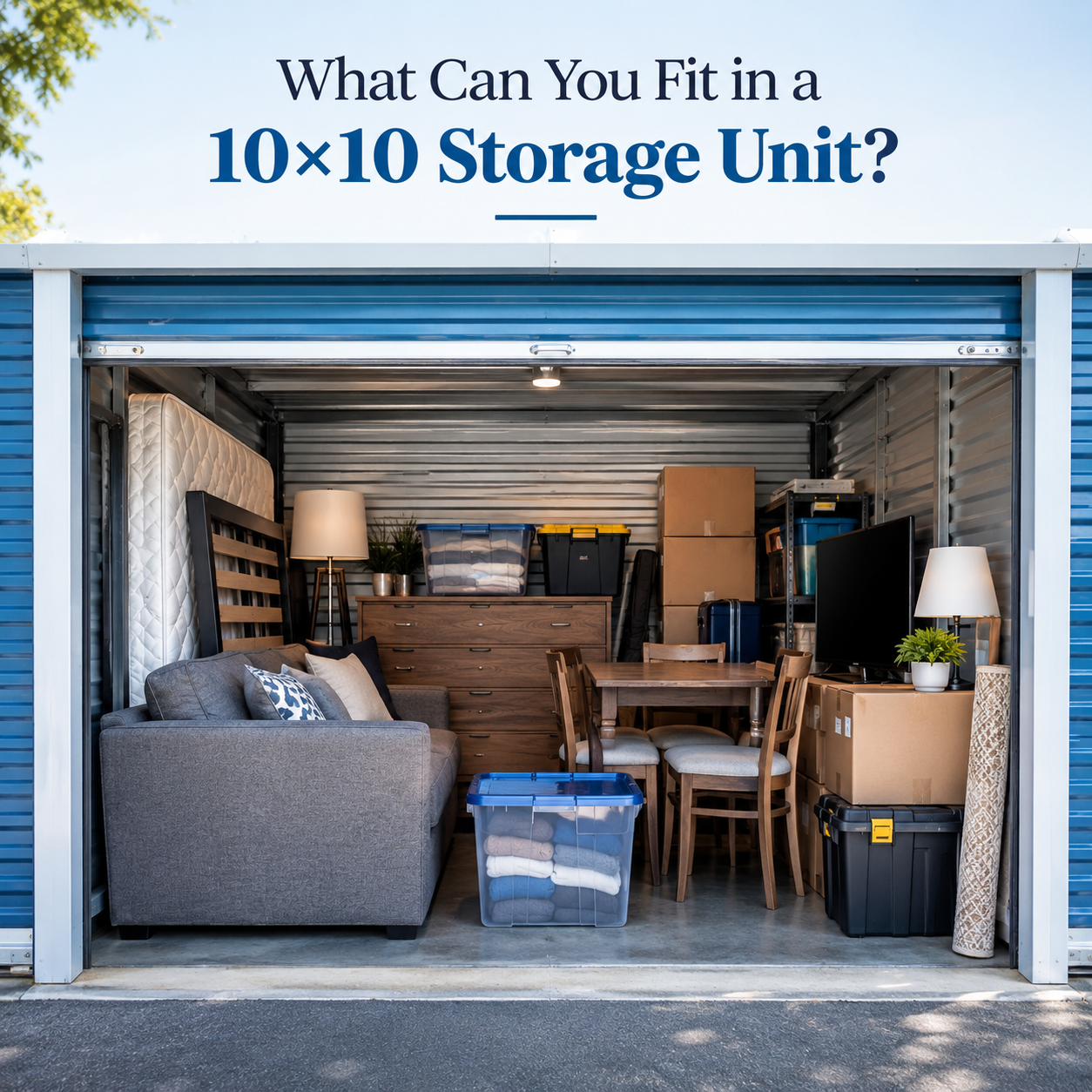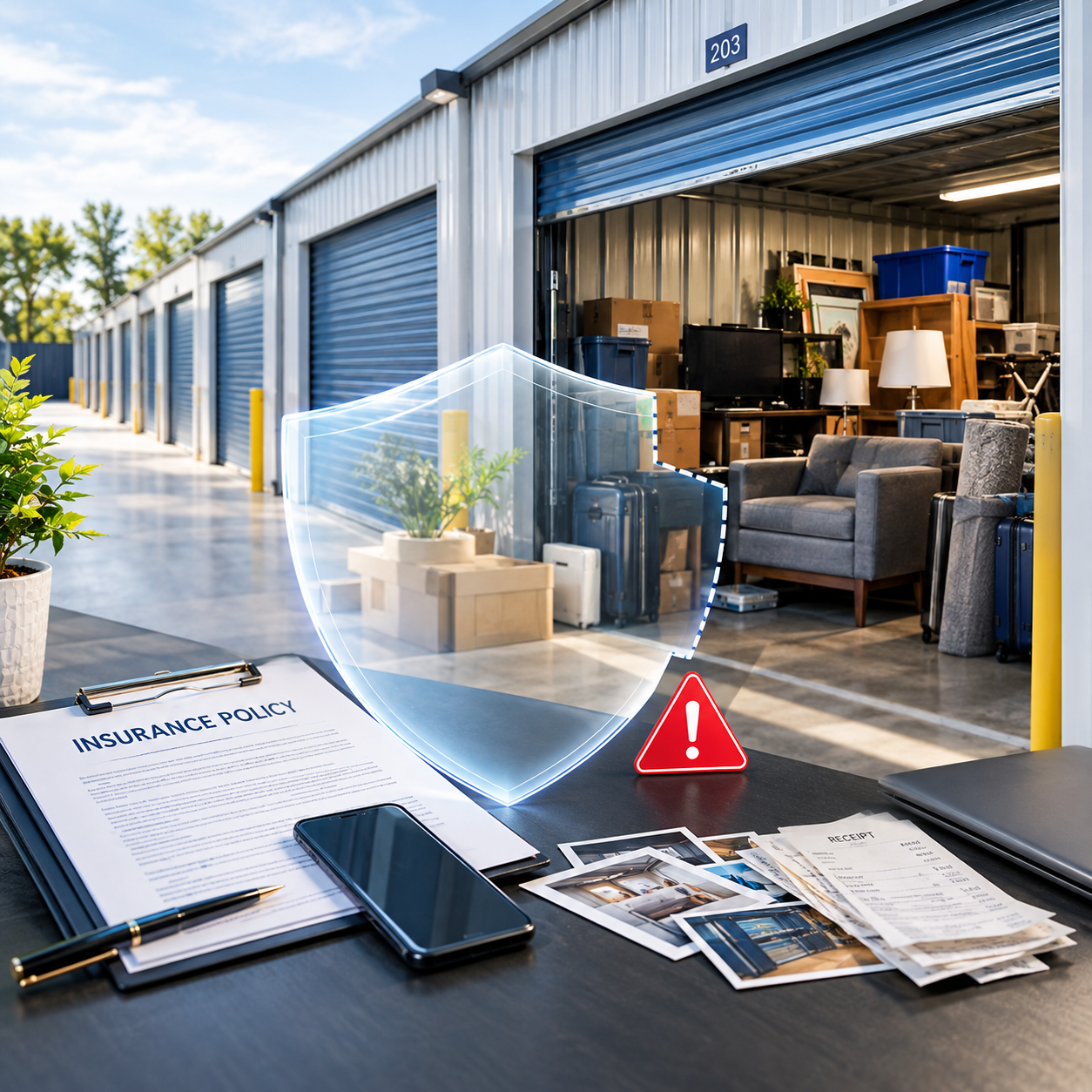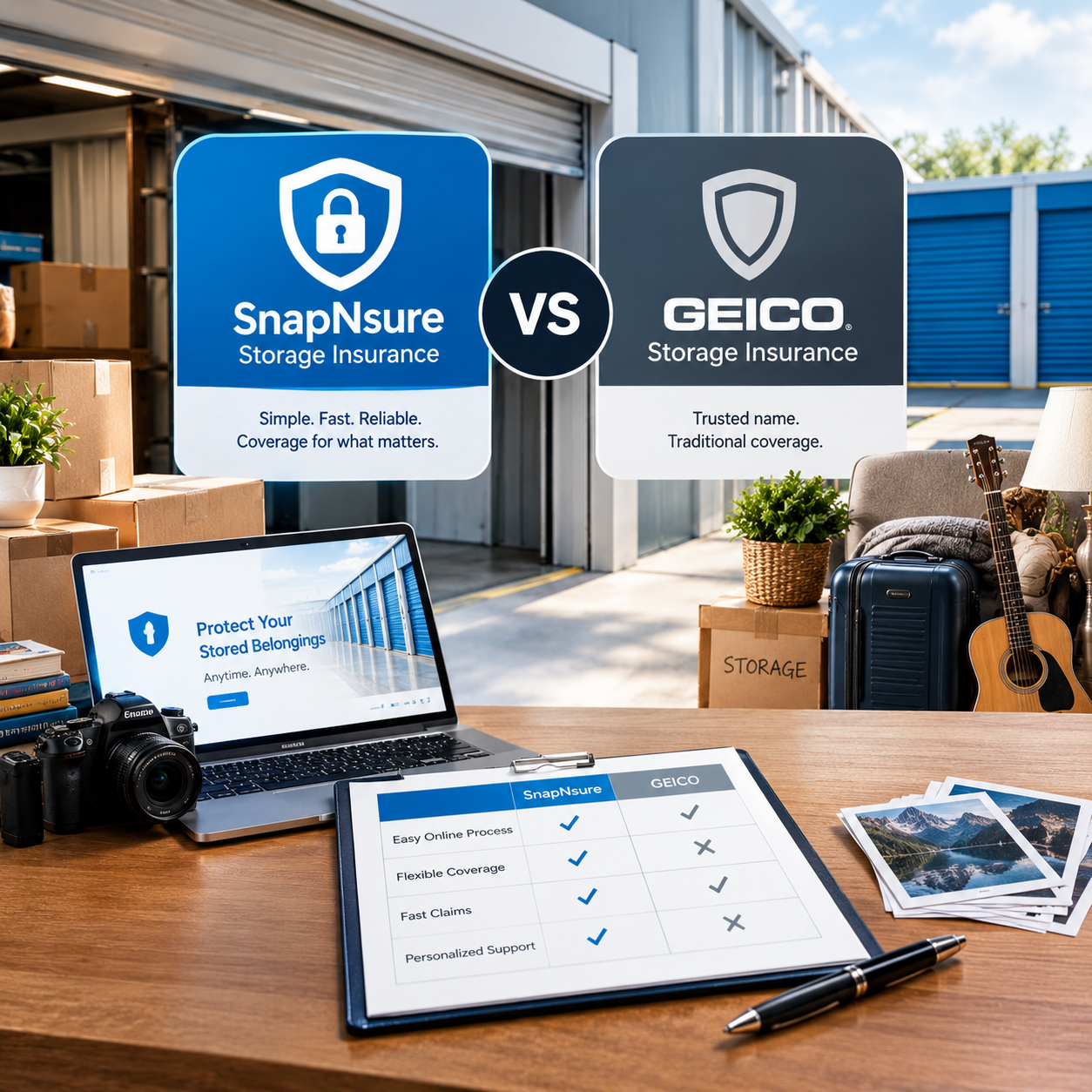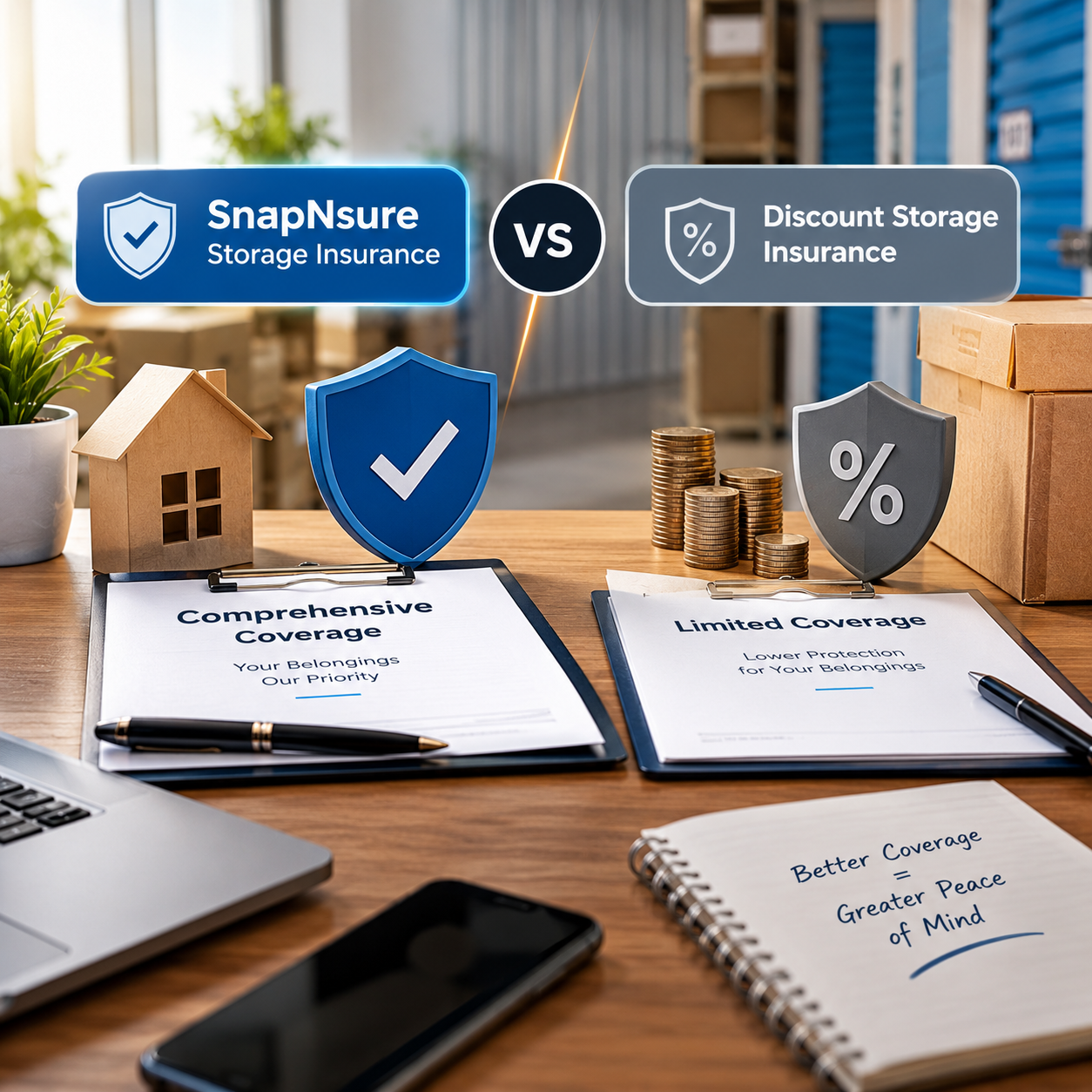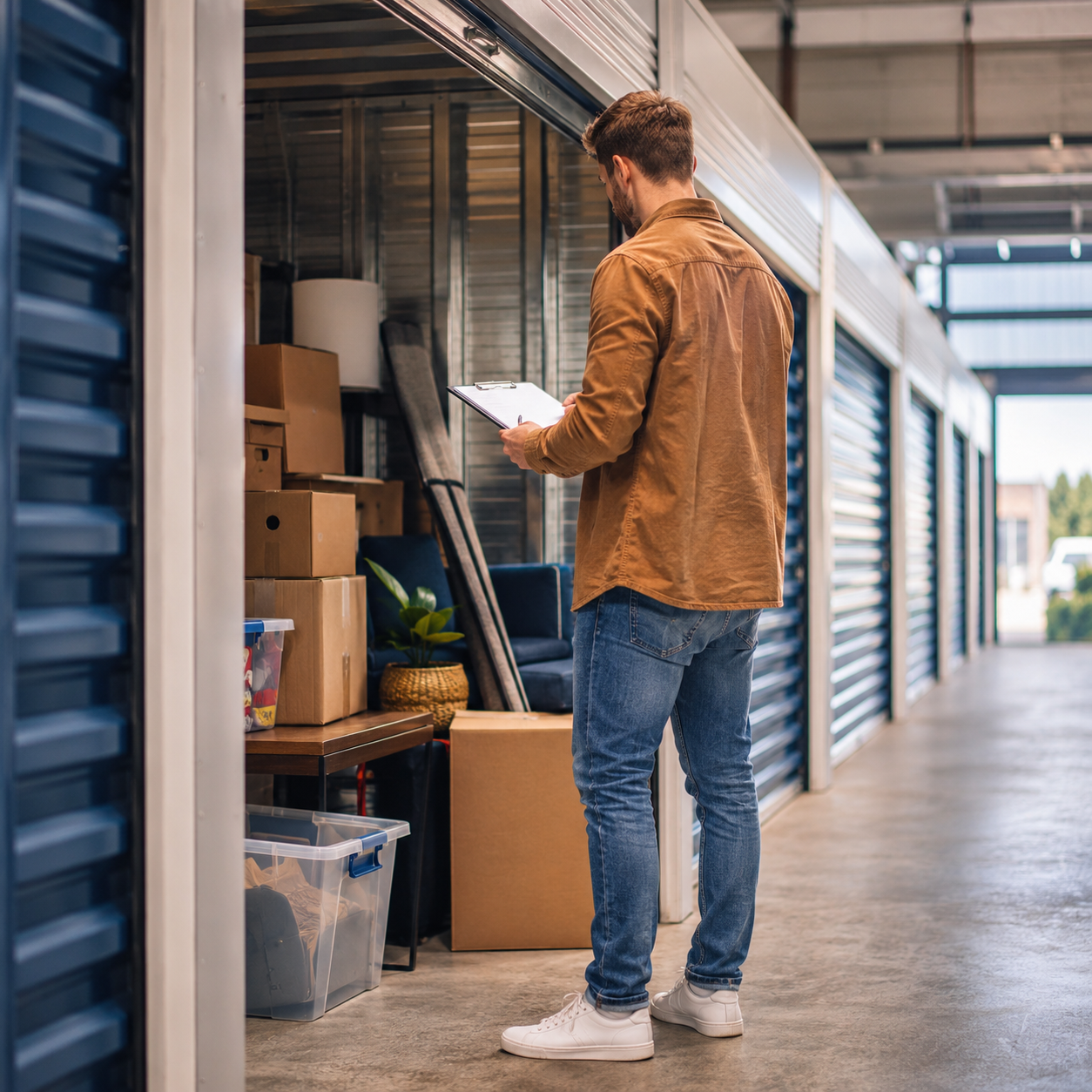
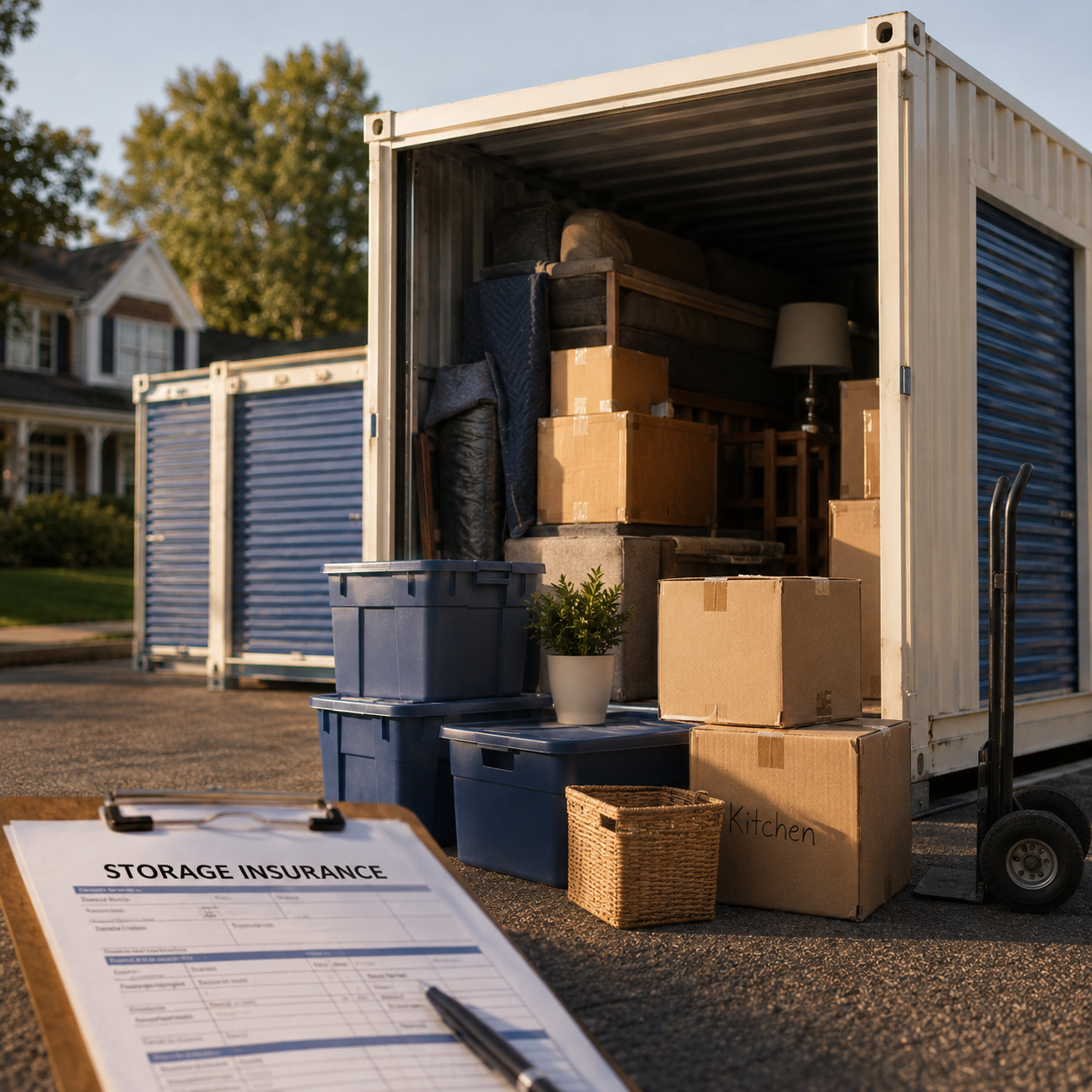
Quick Overview: PODS, PackRat, Mobile Mini, and traditional storage units offer convenient ways to create extra space. But renting storage does not automatically mean your belongings are protected. This blog explains why storage unit insurance still matters, what risks to consider, how coverage works, and how SnapNsure can help protect eligible belongings stored in fixed and mobile storage settings.
Today, storage comes in many forms. You may rent a traditional unit or use a mobile container from a company such as PODS, PackRat, or Mobile Mini. The setup is different, but one question stays the same: What happens if something damages the things inside?
A secure storage space can reduce risk. It does not remove it.
That is where storage unit insurance comes in. It can provide financial protection for covered losses that a storage company may not be responsible for. Whether your belongings sit in a facility or a mobile storage container, knowing where your responsibility starts is important.
A Storage Company Provides Space. That Does Not Mean It Insures Your Belongings.
This is one of the biggest misunderstandings about storage.
When you rent a storage unit, you are paying for space. The facility may have gates, cameras, locks, monitored access, and other security measures. But those features do not automatically mean your belongings are insured.
The same idea applies to mobile storage.
For example, PODS’ customer agreement states that customers assume responsibility for loss or damage to stored property in various situations and places responsibility on the customer to adequately insure the property.
That distinction matters.
You can take every reasonable step to choose a secure storage provider and still face an unexpected loss. A fire can start. A roof can leak. A storm can cause damage. A break-in can happen.
The storage company gives you a place to put your belongings. Storage unit insurance is designed to protect the belongings themselves against covered risks.
How Safe Are Storage Units?
So, how safe are storage units? The honest answer is that it depends on the facility and its security setup. A good storage facility can have strong physical and electronic security, but no storage location is completely free from risk.
SnapNsure has specific requirements for fixed storage facilities. The facility must have a fence with monitored entry points, 24-hour monitored security and CCTV, and construction using metal or brick materials.
These requirements show an important point: security and insurance work differently. Security helps reduce the chance of a loss. Insurance helps address the financial impact of a covered loss if one occurs.
You need both ideas in the picture when deciding how to protect your stored belongings.
PODS, PackRat, and Mobile Mini Still Leave an Insurance Question
Mobile storage has become popular because it can make moving, renovating, downsizing, or temporary storage easier.
A container may arrive at your property. You load it. The company may then move it or store it elsewhere, depending on the service arrangement.
That convenience does not answer the insurance question.
You still need to know:
- Who is responsible for your belongings?
- What causes of loss are covered?
- What exclusions apply?
- What is the coverage limit?
- What deductible applies?
- Does the policy cover the type of storage you are using?
These questions are more useful than simply asking whether the container is strong or the storage facility has cameras.
SnapNsure provides coverage for personal and business property stored in a self-storage unit or mobile storage unit, subject to the policy terms and conditions. Its listed covered causes of loss include fire or lightning, forced-entry burglary, explosion, windstorm or hail, tornado, smoke, vandalism, roof-leak water damage, collapse, falling objects, and several other covered events.
Optional coverage is also available for certain risks, including flood, named storms, earthquake, and rodents. This gives you a clearer way to think about mobile storage: the container is the space. Storage unit insurance is the financial protection for covered property inside that space.
Water Damage and Climate Control: Why Coverage Still Matters
A climate-controlled unit can help manage temperature and humidity, but it cannot prevent every type of loss. Imagine opening your unit after a major storm and finding damp floors and soaked boxes caused by a roof leak. This is where water damage storage unit coverage becomes important.
With SnapNsure, roof-leak water damage is listed as a covered cause of loss, while flood or rising water requires additional coverage. Climate control does not replace storage unit insurance, either. Fire, burglary, roof leaks, and other covered events can still happen.
SnapNsure also does not charge higher premiums for climate-controlled units, so you can choose this storage feature based on your needs without paying more for insurance.
Coverage Limits Matter More Than Many Renters Realize
Another common mistake is choosing coverage based only on the monthly price.
Think about what is actually inside your unit. Furniture, clothing, household goods, electronics, business property, and other everyday belongings can add up quickly. A lower coverage limit may not be enough to replace everything after a major covered loss.
Many storage insurance policies provide limits ranging from a few thousand dollars to around $5,000 per unit. SnapNsure offers coverage of up to $25,000 per unit, depending on the plan selected. For policies above $10,000 in coverage, the deductible is $500.
The goal is not to buy more coverage than you need. It is to choose a limit that makes sense for the actual contents you are storing.
What If You Already Have Another Storage Policy?
People sometimes change storage providers or find a different policy after renting a unit.
You may even search online, “can I cancel Avid self-storage insurance premium?” The answer depends on the policy and provider. Always check the terms before canceling coverage. You do not want to create a gap between one policy ending and another beginning.
SnapNsure makes switching simpler by handling the cancellation of an existing storage insurance policy at no extra cost when you switch to SnapNsure. That can save you from managing the transition yourself.
What Should You Check Before Choosing Storage Unit Insurance?
Before buying coverage, take a few minutes to check these points:
1. Know what you are storing.
Make a basic inventory and estimate the replacement cost.
2. Check the coverage limit.
Make sure the limit fits the amount of property in your unit.
3. Read covered causes of loss.
Do not assume every type of damage is included.
4. Check exclusions and optional coverage.
For example, flood is not automatically included with SnapNsure’s standard coverage.
5. Keep records.
Photos and receipts can help document what you stored.
6. Understand the storage requirements.
For fixed storage, SnapNsure requires a qualifying secure self-storage facility.
These simple steps can make your coverage easier to understand before you need it.
Storage Space Is Not the Same as Storage Protection
PODS, PackRat, Mobile Mini, and traditional storage can give you extra space, but the space alone does not protect what you store inside. That is where storage unit insurance can make a difference. SnapNsure provides coverage for belongings stored in both fixed and mobile storage settings, with a simple process built around your needs.
Its contents coverage program is underwritten by Pacific Insurance Company Limited, a company of The Hartford, which has provided insurance solutions for more than 200 years and holds an A+ AM Best rating.
With SnapNsure, you can enjoy:
- Customizable coverage to fit your storage needs
- Simple online sign-up without a lengthy process
- Online policy management when you need it
- No hidden fees to complicate your costs
- Nationwide licensing and consistent pricing
Your storage space holds your belongings. SnapNsure helps protect them with coverage designed for storage.
FAQs
1. Do PODS, PackRat, and Mobile Mini include storage unit insurance?
Storage providers may offer protection options, but coverage varies. Review the agreement carefully and consider separate storage unit insurance for covered losses.
2. How safe are storage units?
Storage unit safety depends on facility security, construction, access controls, and monitoring. Even secure facilities cannot eliminate every risk of property loss.
3. Does SnapNsure cover mobile storage containers?
Yes. SnapNsure provides storage unit insurance for qualifying belongings stored in both traditional fixed storage units and mobile storage settings.
4. Can I customize my SnapNsure storage unit insurance coverage?
Yes. SnapNsure allows customers to select coverage based on their storage needs, subject to available options, policy terms, limits, and eligibility requirements.
5. Does SnapNsure cover flood damage?
Flood coverage is not automatically included. SnapNsure offers optional flood coverage, subject to eligibility, policy terms, conditions, and applicable limitations.