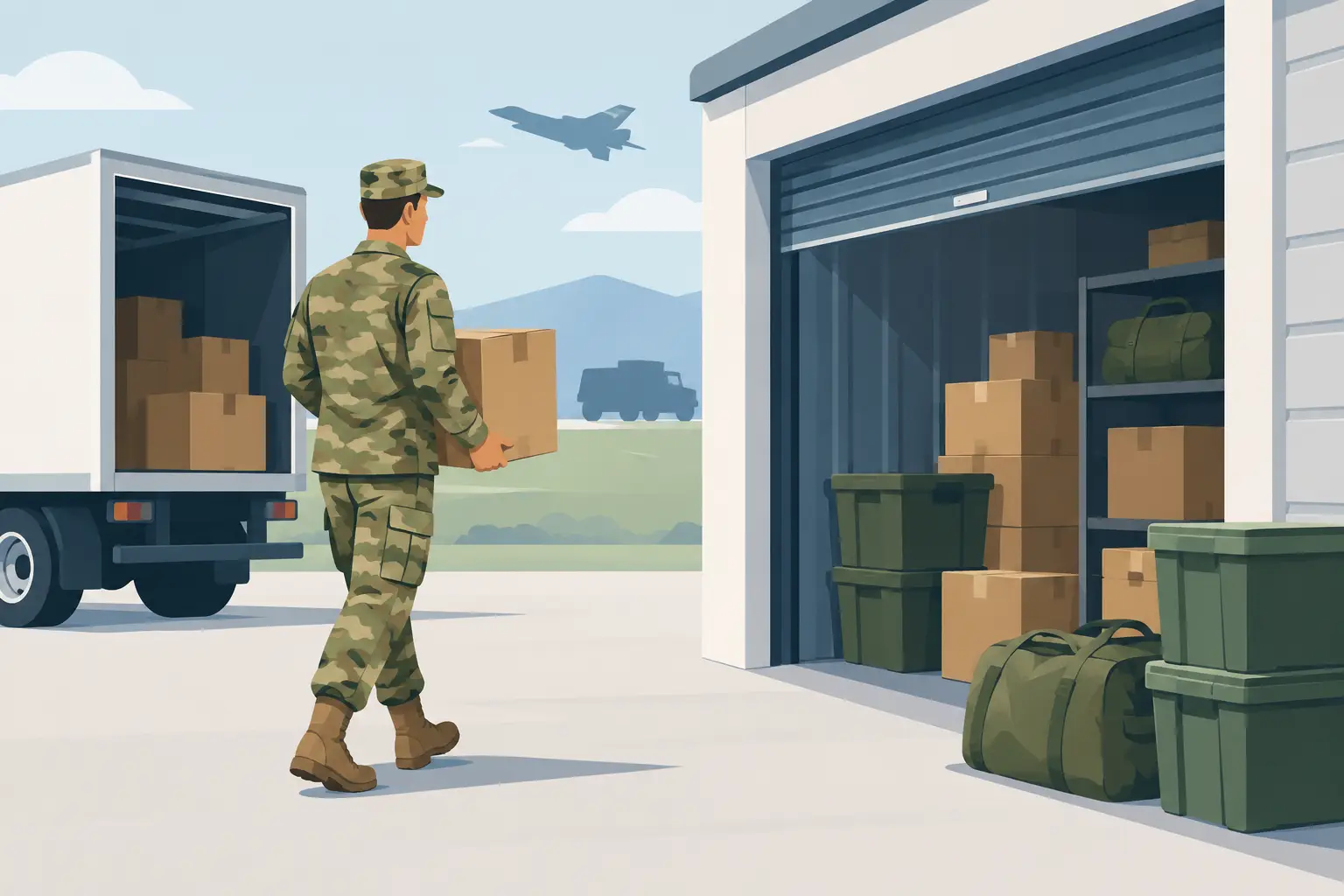
A PCS order can put your entire household on a deadline. One week you are sorting uniforms, school records, furniture, and family keepsakes. The next, a storage unit or portable container is packed, locked, and out of sight. Military storage insurance is the protection that helps make sure one unexpected loss does not turn that move into a costly setback.
The key word is real. A storage facility may offer a low-cost protection plan at the counter, but that is not always the same as an insurance policy. Before you accept it, understand what it covers, what it leaves out, and whether its limits reflect what is actually inside your unit.
Why military families need more than a basic plan
Military moves create conditions that make storage a practical necessity. You may need storage while waiting for housing, preparing a home for sale, moving overseas, separating service dates, or deploying on short notice. Some families use a traditional self-storage unit. Others use a mobile container that sits in a driveway before being transported to another location.
The problem is simple: your belongings remain exposed to risks while you are focused on everything else. A fire, water leak, break-in, wind event, or vehicle impact can damage property in a matter of minutes. If you are stationed hundreds or thousands of miles away, you may not discover the issue until a facility calls you – if it calls at all.
Basic storage-provider plans can look convenient because they are added to the monthly bill. Convenience is not the same as strong protection. These plans may carry lower limits, narrow loss definitions, special caps for certain property, or exclusions that become painfully clear after a claim.
That is why military families should treat storage coverage as a decision, not an add-on. You are not insuring an empty metal unit. You are protecting the items that help your household function when the next chapter begins.
What military storage insurance should cover
No policy covers every event or every item without conditions. Still, stronger storage insurance should be built to address meaningful risks, not just the easiest ones to insure.
Start by looking at the causes of loss. Fire and theft are common concerns, but they should not be the entire conversation. Water damage, smoke damage, vandalism, damage from a vehicle, and weather-related losses can matter just as much. Flood and named storm coverage deserve special attention for customers storing property in areas vulnerable to heavy rain, hurricanes, or storm surge.
Then look at how the policy treats the property itself. A household can easily store several thousand dollars’ worth of furniture, clothing, kitchen items, electronics, tools, and personal belongings. A low limit may sound fine until you total up what it would cost to replace those items at current prices.
A true insurance policy from an established, highly rated insurer can offer a clearer path than an in-house protection program. Read the policy documents and confirm the available limits, deductible, covered causes of loss, exclusions, and special limits for categories such as jewelry, collectibles, cash, or business property. That is not fine-print paranoia. That is smart preparation.
Do not assume your home or renters policy is enough
Some homeowners and renters policies provide limited off-premises coverage. That can be useful, but it is not a blank check for belongings stored away from home. Coverage may be reduced for property in a storage facility, subject to a separate deductible, limited by the length of time items are stored, or excluded for particular causes of loss.
Military households also face an added wrinkle: a move may involve changing addresses, changing states, temporary housing, or periods when a home is vacant. Those details can affect how another policy responds. The answer depends on your insurer and your policy, so confirm it before assuming your stored property is fully protected.
A dedicated storage policy can make the decision cleaner. It is designed around the contents in the unit or container, with coverage limits selected for that specific purpose. Rather than hoping a homeowners or renters policy will fill the gap, you know what coverage you purchased for your stored belongings.
Choose a limit based on replacement cost, not guesswork
The fastest way to underinsure a storage unit is to estimate by looking at a few large pieces of furniture. The couch might be worth $1,000, but the real value is often in everything packed around it: beds, linens, dishes, small appliances, clothing, books, televisions, toys, décor, and boxes of everyday household essentials.
Walk room by room and estimate what it would cost to replace the contents today. Do not use what you originally paid years ago if replacing the item now would cost more. Take photos before loading, and keep a simple inventory on your phone or in a cloud account. For high-value items, save receipts, appraisals, or serial numbers when available.
Higher limits matter when an entire unit is damaged. A policy limit of a few thousand dollars may not go far after a widespread loss. Look for options that let you insure the actual value of your contents, including limits up to $25,000 per unit when that level fits your situation.
Mobile containers need coverage built for the move
A portable storage container is not just a storage unit with wheels. It may be parked outside, loaded at one address, transported, stored at a warehouse, then delivered again. Each stage creates a different exposure.
Do not assume a facility-based plan automatically protects a mobile container. Ask whether coverage applies while the container is at your residence, while it is in transit, and while it is at a storage yard. Ask whether weather losses are covered and whether your chosen limit follows the contents through the full process.
This is especially relevant during a PCS, when timing is rarely perfect. A delayed closing, shifted reporting date, or change in housing can turn a short-term container rental into months of storage. Your insurance should fit the way you are actually using the service, not the way the brochure assumes you will use it.
Compare the monthly price, but compare the protection first
A cheap plan is not a bargain if the claim payment falls short when you need it. Compare the monthly premium alongside the coverage limit, deductible, covered losses, and exclusions. If one option costs less but removes flood, named storm, or mobile storage protection, the savings may not be worth the trade-off.
Also watch for storage-facility plans that are presented as protection but are not regulated insurance policies. They can have different claim rules and narrower promises. Ask directly: Is this an actual insurance policy? Who underwrites it? What happens if I need to file a claim?
SnapNsure gives storage customers a straightforward alternative: real insurance coverage from an A-rated underwriter, with monthly policies designed for traditional and mobile storage and pricing positioned to save customers up to 50% versus many storage-provider offerings. That means you can choose the coverage you need without automatically paying the facility’s price.
How to buy with confidence before your next move
Start before the unit is loaded, not after the lock is on the door. Confirm the storage address or container provider, estimate the value of your contents, and decide how much loss you could comfortably absorb through a deductible. Then review the policy details with the risks in mind, especially water, storm, and transportation exposure.
Keep your inventory, photos, policy information, and facility agreement somewhere you can access from anywhere. That matters during deployment, travel, and cross-country moves. If a spouse, relative, or trusted friend may need to handle a storage issue while you are away, make sure they know where those records are kept.
Finally, do not let a busy move convince you to settle for vague protection. Storage is temporary. The financial impact of losing what is inside it can last much longer. Get a quote, compare real coverage, and choose a policy that lets your belongings wait safely while your orders take you forward.