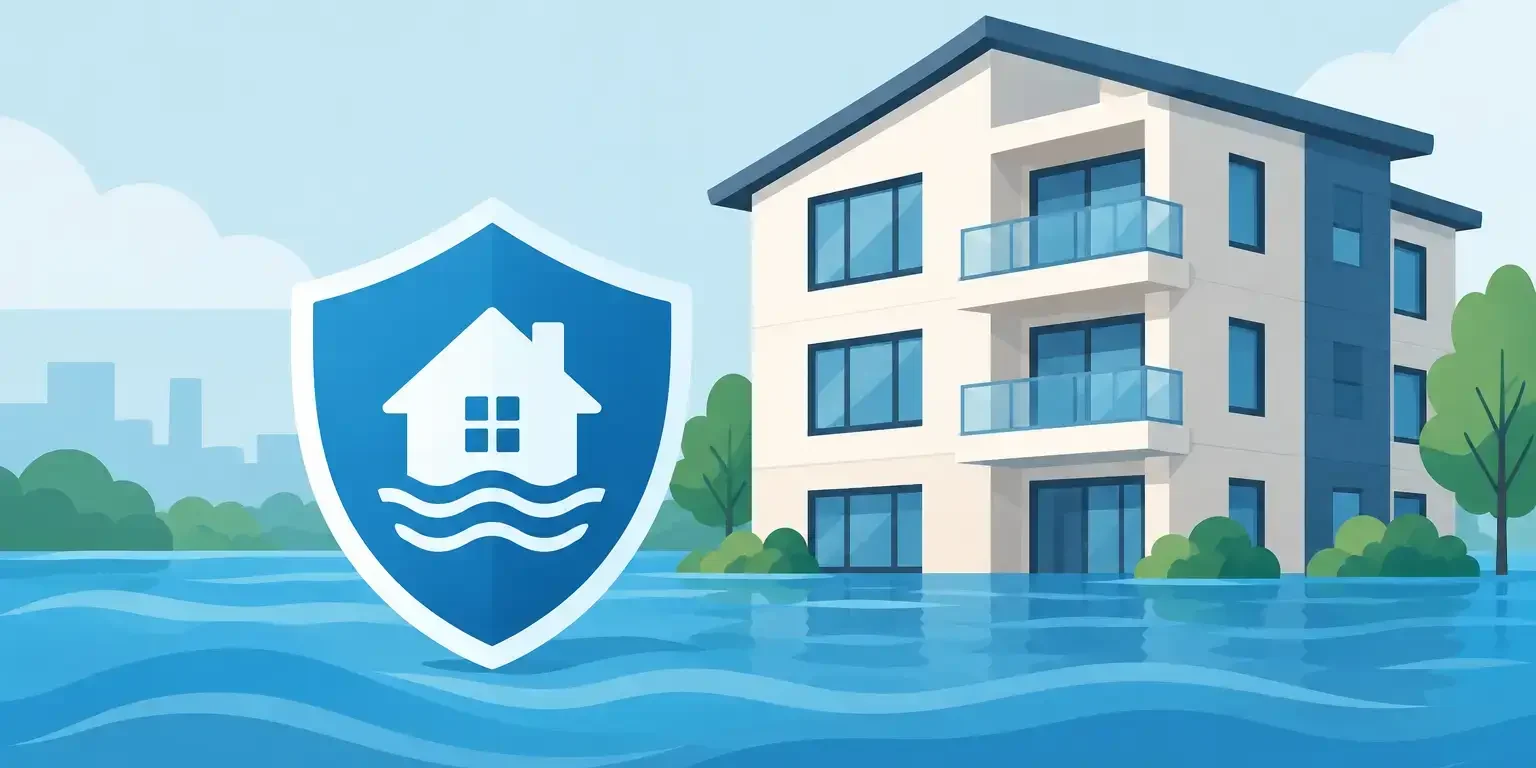
A storage unit can look dry, secure, and safely above ground right up until water finds its way in. Heavy rain, overflowing drains, storm surge, and nearby flooding can turn a storage space into a costly loss fast. This guide to flood storage coverage explains the question that matters most before bad weather arrives: if water damages your belongings, who actually pays?
The answer is not always the storage facility. Many customers assume the monthly protection fee on their storage bill covers virtually any damage. Often, it does not. Facility plans can come with narrow definitions, low limits, deductibles, exclusions, and restrictions that become painfully clear only after filing a claim.
What Is Flood Storage Coverage?
Flood storage coverage is insurance protection for belongings damaged by flood-related water while they are kept in a self-storage unit or mobile storage container. Depending on the policy, it may help pay to repair or replace covered personal property after a qualifying water event.
That sounds simple, but the wording behind it matters. Insurers may distinguish between water entering from outside the unit, water backed up through a drain, rain entering through a damaged roof, burst pipes, and storm surge. These are not interchangeable events under every policy.
A real insurance policy should clearly state covered causes of loss and exclusions. That gives you something far more useful than a vague promise of protection: a defined contract backed by an insurer. Before you buy, ask directly whether flood and named storm losses are covered for your type of storage.
Why the Facility’s Plan May Not Be Enough
Storage operators are in the business of renting space, not replacing everything you own. The protection plans they offer are sometimes useful, but they are not automatically the strongest option or even a traditional insurance policy.
Some plans limit what they will pay for certain categories of property. Others exclude losses caused by flood, surface water, hurricanes, or named storms. Some may require proof of value for every item, which can be difficult when receipts are packed away or long gone. A low coverage limit can also leave a major gap if you are storing the contents of a one-bedroom apartment, furniture during a renovation, or belongings during a military move.
Price is another issue. A facility plan may be added to your bill because it is convenient, not because it is the best value. Convenience is not coverage. Compare the monthly cost, the policy limit, deductible, covered causes of loss, and exclusions before assuming the plan is a bargain.
Guide to Flood Storage Coverage: What to Check
A policy can say it covers water damage while still excluding the exact event you are worried about. Read the coverage details before moving in, especially if your storage location has a history of heavy rain, coastal storms, poor drainage, or nearby waterways.
Start with the definition of flood. Does the policy cover water that overflows from land, rivers, creeks, drains, or storm systems? Is storm surge included? Are named storms treated differently from ordinary rainstorms? A policy that covers a broken pipe but excludes floodwater is not the same as flood storage coverage.
Next, look at the coverage limit. Your limit should reflect the replacement cost of what is inside the unit, not a quick guess at what it would sell for today. Replacing a mattress, sofa, electronics, clothing, kitchenware, books, tools, and boxes of household goods adds up quickly. Underinsuring your storage unit may save a few dollars monthly but could cost thousands after a loss.
Then check the deductible. This is the amount you pay out of pocket before a covered claim payment applies. A very low monthly premium may come with a deductible that makes smaller claims impractical. There is no single right deductible – it depends on your budget and the value of your stored property – but you should know the number before you need it.
Also review category limits. Jewelry, watches, collectibles, fine art, cash, business inventory, firearms, and high-value electronics may have special limits or exclusions. If you are storing these items, do not assume your general policy limit applies in full.
Finally, confirm that your storage method is eligible. Traditional indoor units, drive-up units, portable containers, PODS-style storage, valet storage, and mobile storage can have different risk profiles. The policy needs to fit where and how your belongings are stored.
How Much Coverage Should You Buy?
The right limit is based on replacement cost, not square footage. A small 5-by-5 unit filled with electronics, designer clothing, documents, and collectibles may need more coverage than a larger unit holding inexpensive furniture.
Walk through your home or make a quick phone inventory before packing. Photograph major items, note brand names and serial numbers when available, and save receipts or order confirmations. You do not need a museum-quality catalog. You need enough documentation to remember what you stored and support a claim if the unexpected happens.
For many customers, limits in the several-thousand-dollar range are appropriate. For a full household move, extended renovation, or long-term storage situation, higher limits can make more sense. SnapNsure offers storage contents insurance with limits up to $25,000 per unit, helping customers insure more than a few boxes and a spare chair.
Do not buy coverage based only on the lowest advertised price. Buy enough to replace what would hurt to lose.
Flood Coverage Does Not Replace Smart Packing
Insurance can protect your financial loss after a covered event. It cannot restore family photos that were never digitized or prevent water from reaching a box placed directly on a concrete floor. Good packing reduces risk and makes recovery easier.
Use plastic storage bins with secure lids for items that are vulnerable to moisture. Elevate boxes, furniture, and electronics on shelving, pallets, or risers whenever the facility permits it. Keep the most valuable property toward the center and higher areas of the unit rather than along doors or exterior walls.
Avoid storing irreplaceable documents, original photos, and highly sensitive valuables if you have another safe option. If they must be stored, use waterproof containers and create digital backups first. Insurance is designed to help with the financial value of covered belongings. Some things carry a personal value no policy can fully replace.
For mobile storage, ask where the container will be kept. A container parked in a low-lying driveway or unsecured lot may face a different exposure than one stored at a managed facility. If severe weather is in the forecast, ask whether the provider can move or secure the container before conditions worsen.
What to Do If Water Damages Your Unit
Safety comes first. Do not enter a unit if there is standing water, structural damage, exposed wiring, or instructions from emergency officials to stay away. Once you are allowed to access it, document the scene before moving or discarding property.
Take wide photos of the unit and close-up photos of damaged items. Make a list of what was affected, gather receipts or photos from before the loss, and report the claim promptly. Do not throw damaged items away until your insurer tells you it is okay, unless they create an immediate health or safety hazard.
Act quickly, but do not let urgency push you into accepting unclear answers. Ask whether the loss is covered, what deductible applies, what documentation is required, and whether there are deadlines for submitting evidence. Clear questions get clear answers.
The Better Time to Check Is Before It Rains
Flood risk is not limited to waterfront neighborhoods. A clogged drainage system, a sudden downpour, a hurricane, or a nearby creek can put stored belongings at risk almost anywhere. The right coverage turns a frightening event into a manageable claim instead of an out-of-pocket disaster.
Before your next storage payment is due, compare what you are paying with what you are actually getting. Read the exclusions, choose a limit that matches your property, and make sure flood and named storm protection are not missing when you need them most.