
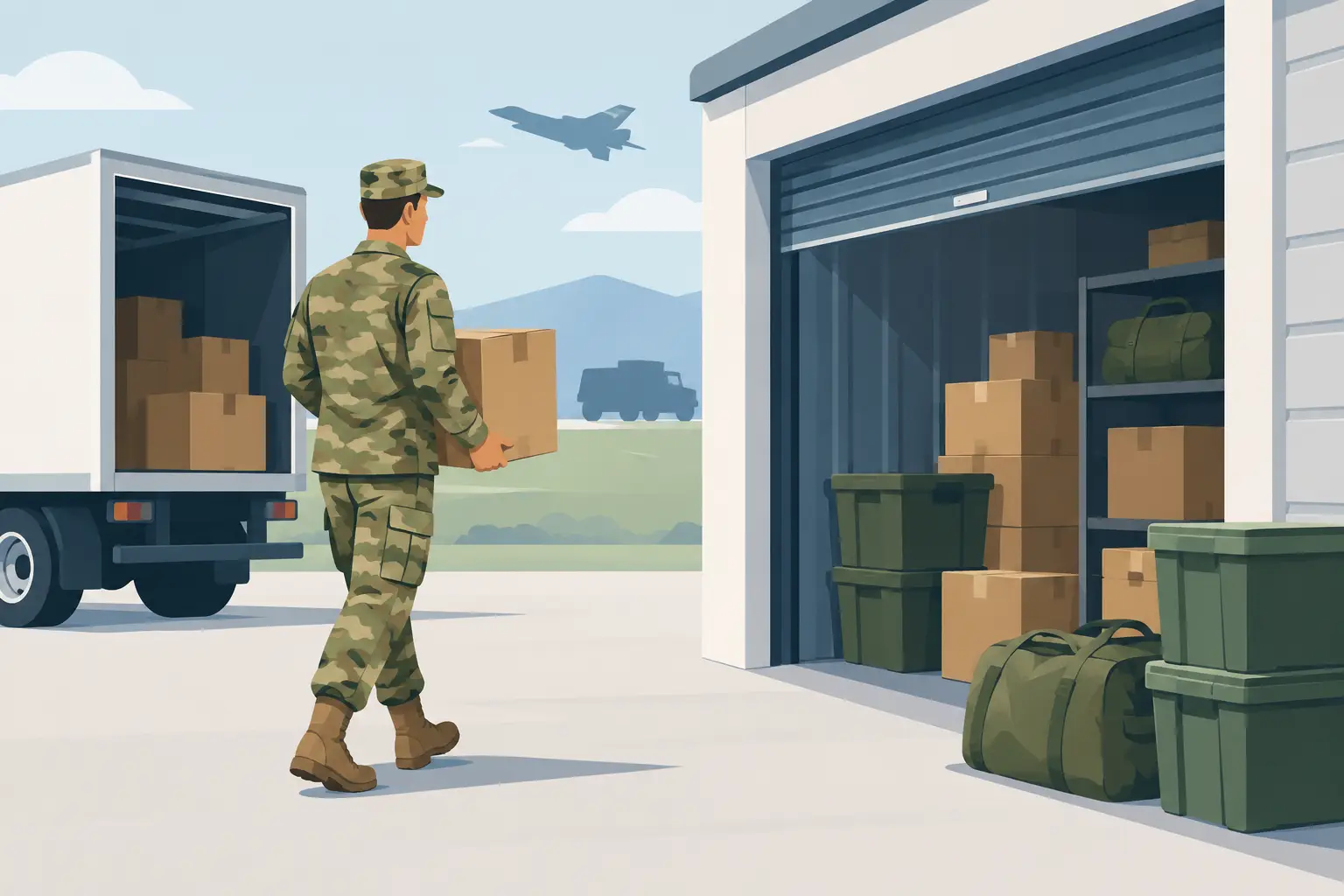
PCS orders can turn a normal household into a logistics problem overnight. This guide to military storage is built for service members and military families who need a safe place for their belongings without overpaying for a unit, a container, or flimsy protection that falls short when something goes wrong.
Military storage is not one-size-fits-all. Your best choice depends on the length of your assignment, whether you need access to your items, where your household goods are headed, and what the military will move versus what you must handle yourself. The goal is simple: store less, choose the right setup, and make sure your valuables are actually protected.
Guide to Military Storage: Start With Your Orders
Before reserving a unit or loading a portable container, read the details of your orders. A short training assignment calls for a different plan than an overseas tour, an unaccompanied assignment, or a stateside PCS with a delayed housing move-in date.
Start by separating your belongings into three groups: items traveling with you, items going into long-term storage, and items you can sell, donate, or discard. This step can save hundreds of dollars. Paying monthly to store duplicate furniture, expired electronics, or boxes you have not opened in years is not a strategy. It is expensive clutter.
Then consider access. If you may need uniforms, seasonal clothing, documents, baby gear, or work equipment while away, a local self-storage unit may make more sense than a container delivered to a warehouse. If you do not need regular access, portable or valet storage can reduce the hassle of multiple loading and unloading days.
For overseas assignments, confirm what your transportation office will handle and what it will not. Government-arranged household goods moves can be helpful, but they do not eliminate the need to understand where your property is going, how long it will be stored, and what protection applies while it is in storage.
Choose the Storage Setup That Fits the Mission
A traditional self-storage unit gives you the most control. You choose the unit size, bring your belongings to the facility, and can typically access them during posted hours. This works well for families staying near their current duty station, people between homes, or anyone who expects to retrieve items during a PCS.
Climate-controlled storage is usually worth considering for wood furniture, photographs, electronics, instruments, leather, documents, and anything sensitive to heat or humidity. It costs more than a basic drive-up unit, but extreme temperatures and moisture can damage property long before a major loss ever occurs.
Portable storage – including containers from providers such as PODS, PackRat, Mobile Mini, and similar services – can be a practical choice when you need loading flexibility. The container comes to you, which means less truck rental coordination and fewer trips to a storage facility. The trade-off is access. Once the container is picked up and moved to a storage center, getting something back may require advance notice and an additional fee.
Valet storage offers another hands-off option. The provider picks up items, stores them off-site, and returns them when requested. It can be useful in small apartments, during a fast move, or when a family is managing a deployment and a household transition at the same time. Just ask clear questions about retrieval timelines, inventory procedures, and what happens if you need an item quickly.
The lowest advertised monthly rate is not always the lowest total cost. Look at administration fees, lock requirements, delivery charges, pickup charges, access fees, promotional-rate expiration dates, and insurance or protection-plan charges. A cheap unit can get expensive fast when the fine print starts adding up.
Pack Like Your Belongings Will Move More Than Once
Storage damage often starts before the door is locked. A rushed pack job creates broken items, crushed boxes, and missing essentials. Use sturdy, uniform boxes when possible, and do not overload them. Heavy books belong in small boxes. Lighter items can go in larger ones.
Wrap furniture and fragile pieces carefully, but avoid trapping moisture against wood or fabric. Clean and fully dry appliances, coolers, and outdoor equipment before storage. A single damp item can create odors, mildew, and a miserable surprise months later.
Create a simple inventory as you pack. Photograph valuable belongings, record serial numbers for electronics, and save receipts or appraisals for higher-value items when available. You do not need a museum-grade catalog. You do need enough documentation to identify what you stored and support a claim if a covered loss occurs.
Keep critical items out of storage whenever possible. That includes passports, military records, legal documents, financial paperwork, medications, irreplaceable family photos, and jewelry. If you would panic without it, carry it with you or place it in a secure location you can access.
Inside the unit or container, elevate boxes and furniture off the floor using pallets or shelving when permitted. Leave a narrow aisle so you can inspect your property and reach important items. Place a moisture absorber where appropriate, but do not treat it as a substitute for climate control or proper packing.
Do Not Confuse a Storage Protection Plan With Real Insurance
This is where many storage customers get caught off guard. A storage facility or container provider may offer a protection plan at checkout and present it as the easy default. Easy is not the same as strong.
Some facility-sold plans are limited programs rather than traditional insurance policies. Coverage can be narrower, limits can be lower, and certain losses may be excluded. Flood, named storms, water damage, mold-related damage, rodents, and high-value property are common areas where customers need to read carefully instead of assuming they are covered.
Your homeowners or renters policy may offer off-premises coverage, but that does not automatically mean every stored item and every type of loss is covered. Limits, deductibles, exclusions, and whether the policy applies to a portable container can all matter. Call your insurer and ask direct questions before relying on existing coverage.
A better approach is to compare the actual policy language, not just the monthly price. Ask what losses are covered, what exclusions apply, how much coverage is available, whether there is a deductible, and how claims work. If your stored property is worth $12,000, a low-limit plan that only pays a fraction of that amount is not a bargain.
SnapNsure offers monthly storage contents insurance designed for self-storage and mobile storage customers, with coverage limits up to $25,000 per unit and protection options that can include flood and named storm coverage. It is real insurance from an A-rated underwriter, not simply a storage operator’s in-house protection program. For military families watching every PCS expense, comparing coverage can reveal meaningful savings without settling for weak protection.
Secure the Unit, But Protect the Paper Trail Too
A good lock matters. Use a high-quality disc lock or similarly hardened lock that fits the facility’s latch correctly. Avoid cheap padlocks with exposed shackles, which are easier to cut or pry. If the facility offers individual alarms, gate access logs, cameras, or well-lit climate-controlled buildings, those features can add peace of mind – but they do not replace insurance.
Before move-in, inspect the unit. Look for signs of water intrusion, roof damage, gaps around doors, pests, or a floor that appears damp. Take date-stamped photos of the empty space and report concerns before your boxes go inside. For portable containers, photograph the container condition and your packed contents before pickup.
Save your rental agreement, inventory, photos, receipts, and insurance documents in a digital folder you can reach from your phone. During a PCS, paperwork has a way of disappearing into the wrong box at the worst possible time. A few organized files can make a stressful situation much easier to manage.
Make Storage Work for Your Next Move
Military life demands flexibility. The storage plan that worked at your last duty station may be wrong for your next assignment, and that is fine. Reassess when orders change, housing dates move, or your family situation shifts.
Before your belongings go behind a roll-up door or into a portable container, know what you own, know what your agreement actually covers, and know what a loss could cost you. Get a quote, compare real coverage against the facility’s default plan, and give your household goods the protection your next move deserves.