That locked storage unit can feel like an extension of your home, but it is not a catch-all vault for every valuable thing you own. Knowing the top items excluded from storage insurance and facility rules before move-in can prevent a painful surprise after a loss. A low-cost storage protection plan may look convenient at checkout, yet its exclusions can leave your most important belongings outside the protection you thought you purchased.
The smart move is simple: separate what is allowed in a unit from what an insurance policy will actually pay for. Then choose coverage based on the belongings you are storing, not the sales pitch at the front desk.
Storage rules and insurance exclusions are not the same
First, a quick reality check. Storage facilities prohibit certain items because they create a fire, contamination, safety, or legal risk. Insurance policies may exclude some of those same items, but they can also limit payment for property that is legal and permitted to store.
That means an item can fall into one of three buckets: not allowed in the unit at all, allowed but excluded from insurance, or covered only up to a smaller dollar limit. The details depend on the facility agreement and the policy. Never assume that “covered contents” means every item you put behind the roll-up door.
Top items excluded from storage coverage
Cash, precious metals, and negotiable items
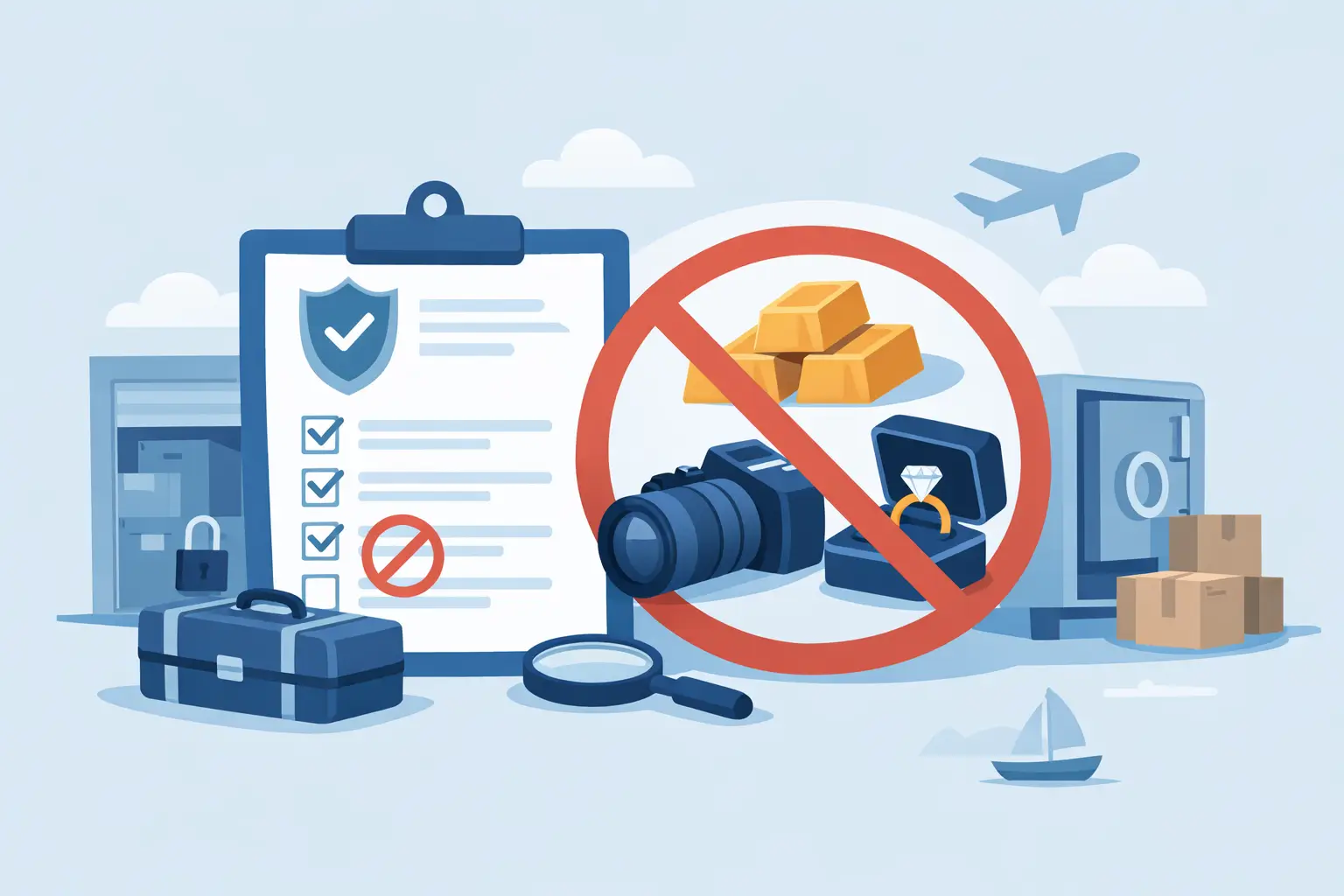
Cash is one of the clearest exclusions in storage insurance. So are items that work like cash, including checks, gift cards, money orders, stock certificates, and similar negotiable papers. Precious metals may also receive limited or no protection depending on the policy.
There is a good reason: these items are hard to verify, easy to conceal, and difficult to value after a loss. If you have cash, important financial papers, or high-value metals, keep them in a bank, home safe, or another appropriate secure location. A storage unit is the wrong place for them.
Hazardous, flammable, and explosive materials
Gasoline, propane tanks, fireworks, ammunition, chemicals, paint thinner, solvents, and other flammables do not belong in self-storage. Neither do corrosive, toxic, or explosive substances. These items can put your belongings, neighboring units, and the entire facility at risk.
This is more than an insurance issue. Most facility contracts expressly ban hazardous materials, and storing them can violate your agreement. If a prohibited item causes a fire or damage, a claim can become far more complicated, and you may be responsible for damage beyond your own unit.
Perishable food, plants, and living things
Food attracts insects and rodents. Plants need light, water, and ventilation. Pets and other living things should never be stored under any circumstances. These are common-sense restrictions, but they are still easy to overlook during a rushed move.
Even sealed pantry goods can create problems if temperatures rise, packaging fails, or pests find their way in. Store only clean, dry household goods. If something can rot, leak, grow, attract pests, or require regular care, keep it out of the unit.
Illegal property and restricted goods
Illegal drugs, stolen property, and any items prohibited by federal, state, or local law are not insurable storage contents. The same principle applies to property that requires special licensing, handling, or storage conditions.
This one should be obvious, but it matters because insurance is designed to protect lawful property against covered losses. It is not a safety net for items that should not be there in the first place.
Business inventory and commercial property
Many personal storage policies are built for household belongings, not business operations. Inventory for resale, business equipment, customer property, samples, tools used commercially, or records tied to a business may be limited or excluded.
It depends on the policy and the nature of the property. A laptop you personally own is different from a unit packed with a retailer’s inventory. If you run a side hustle, move a business, or store equipment for work, be direct about it when getting coverage. Personal insurance should not be stretched to cover a commercial exposure it was never designed to handle.
Jewelry, art, collectibles, and other high-value property
Fine jewelry, watches, artwork, antiques, rare coins, collectibles, and memorabilia may not be fully excluded, but they are frequently subject to special limits. A policy may pay only a set amount for an entire category, even when your total storage coverage limit is much higher.
That distinction matters. A $10,000 contents limit does not automatically mean a $10,000 diamond ring is protected for its full value. Before storing irreplaceable or high-value property, confirm whether it is covered, whether a sublimit applies, and what proof of value you would need for a claim. Sometimes the best answer is keeping these items somewhere else entirely.
Documents, data, and irreplaceable records
Paper files, photographs, manuscripts, blueprints, digital drives, and other records can have value, but the information on them may be impossible to replace. Insurance often addresses the physical media, not the cost of recreating the underlying data or sentimental value.
Do not put your only copy of a family archive, tax record, legal document, or business backup drive into storage and hope for the best. Scan documents, back up files securely, and keep originals that cannot be replaced in a safer location.
Vehicles, trailers, and watercraft
Cars, motorcycles, boats, RVs, trailers, and similar property require special attention. Some facilities allow them only in designated spaces. Some insurance policies exclude them entirely or cover only specific types of damage under narrow circumstances.
Vehicle insurance, comprehensive coverage, registration requirements, and facility rules can all come into play. Do not assume your storage contents policy will replace a vehicle just because it is parked behind a gate. Ask exactly what policy applies and whether the vehicle is legally and properly stored.
The exclusions that matter even when the item is covered
An item may be eligible for coverage and still be denied if the loss itself is excluded. Wear and tear, deterioration, rust, mold, vermin, insects, gradual leakage, mechanical breakdown, and poor packing are common trouble spots in storage-related claims.
For example, a policy may respond to a sudden covered water loss but not damage caused by months of humidity and mildew. That is why preparation matters. Use clean, sturdy boxes; elevate belongings on pallets or shelving; avoid plastic bags that trap moisture; and leave a small aisle so you can inspect the unit periodically.
Flood and named storm protection are another major point of difference. Some storage-provider protection plans are thin where customers need help most. If your unit is in a flood-prone area or you are using a mobile storage container during a move, do not settle for vague wording. Ask what types of water damage and storm losses are actually included.
How to protect what you plan to store
Start with a quick inventory before the first box goes in. Take photos, record serial numbers, and save receipts or appraisals for higher-value property. This is not busywork. If a covered loss happens, documentation helps prove what you owned and what it was worth.
Next, make a keep-out pile for cash, sensitive records, irreplaceable heirlooms, hazardous items, and anything with a special coverage limit you have not confirmed. Then compare the policy limit to the real replacement cost of what remains. The cheapest plan is not a bargain if it leaves a major gap.
Finally, read the policy and facility agreement before signing, especially the exclusions and special limits. Real insurance should be clear about what it covers, what it does not, and how much protection is available. SnapNsure offers monthly storage contents insurance designed for customers who want broader protection, higher limits, and a better value than many facility-sold plans.
Your storage unit should simplify a move, renovation, deployment, or life transition – not create a new financial risk. Store smart, document what matters, and choose coverage that treats your belongings like more than an afterthought.