
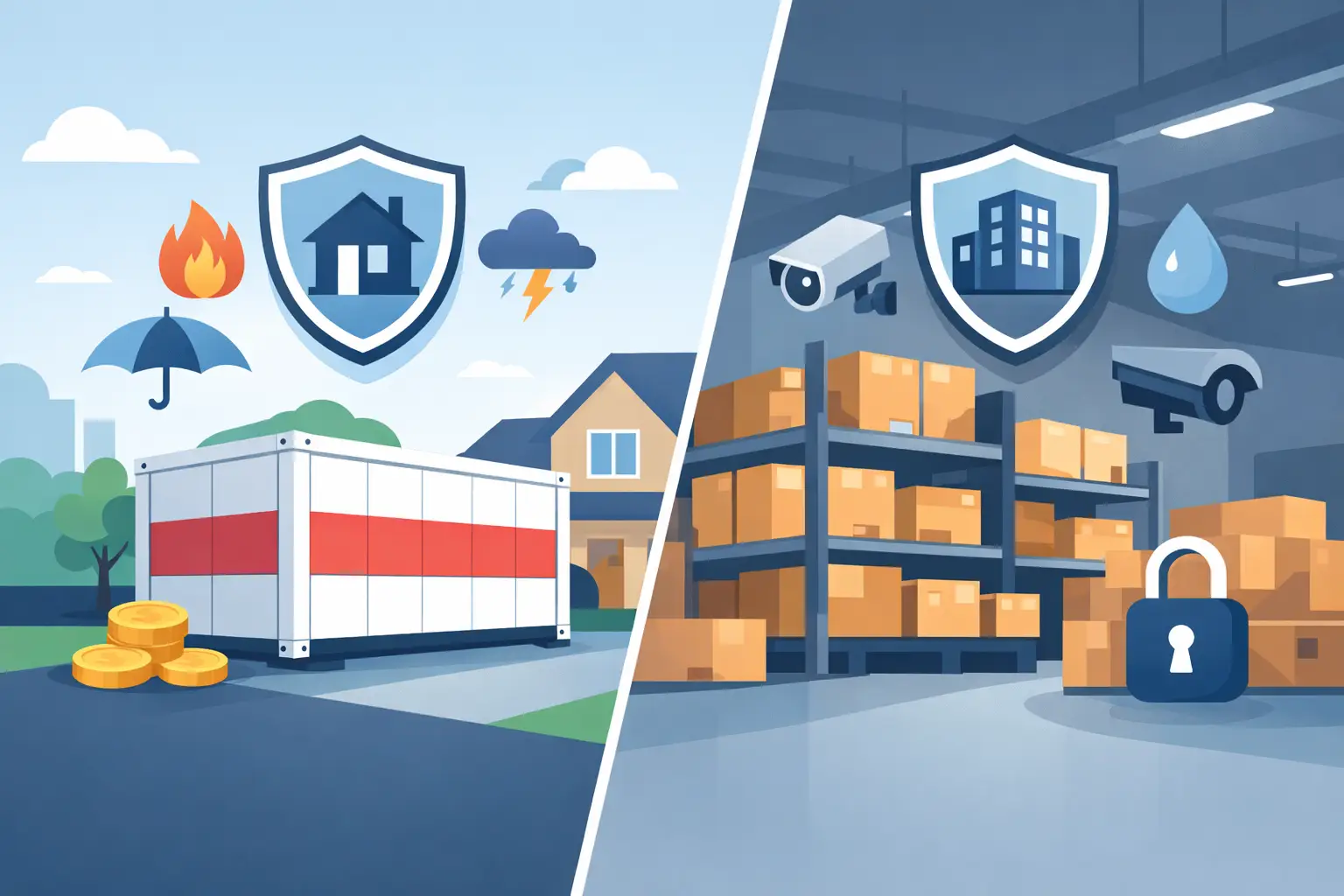
When your stuff is sitting in a portable container, the fine print matters fast. The real question in PODS insurance vs facility coverage is simple: if your belongings are damaged, stolen, or ruined by weather, are you actually covered – or just paying for something that sounds reassuring at checkout?
That is where a lot of storage customers get caught. A facility may offer a protection plan when you rent a unit or container, and it can feel like the easy box to check. But easy is not always enough. If you are storing furniture during a move, keeping business inventory off-site, or packing up a home during renovation, you need to know what kind of protection you are buying, what it excludes, and how much it will really pay.
PODS insurance vs facility coverage: the core difference
The biggest difference is this: real insurance is not the same thing as a facility-issued protection plan. Many storage operators and container companies offer limited coverage programs designed around their own terms, limits, and exclusions. Those plans may help in certain situations, but they are often narrower than customers expect.
A true storage contents insurance policy is built to insure your belongings. That distinction matters. It affects what losses are covered, how claims are handled, how much protection you can buy, and whether major risks like flood or named storms are included.
That does not mean every facility plan is worthless. Some customers use them because they are convenient and bundled into the rental process. But convenience is a weak reason to overpay for less protection.
Why facility coverage often feels better than it is
Storage operators are good at making their in-house plans sound sufficient. The monthly fee may look modest, and the paperwork is usually short. But short paperwork can mean short protection.
A lot of facility coverage is limited in one of two ways. First, it may cap payouts at amounts that do not reflect what people actually store. Second, it may exclude some of the exact losses that worry customers most, such as water damage, flood-related events, storm damage, mold tied to a covered event, or high-value categories.
This is where people get frustrated. They assume they are covered because they paid for a plan. Then they learn the plan was really a narrow reimbursement program with tight restrictions.
What to compare before you choose
If you want a fair PODS insurance vs facility coverage comparison, ignore the sales pitch and compare the working parts.
Start with covered causes of loss. Ask whether the protection includes theft, fire, smoke, vandalism, water damage, wind, flood, and named storms. Do not assume. A plan that covers only a handful of events may cost less for a reason.
Then look at coverage limits. Plenty of people put far more value into storage than they realize. One container can hold a full apartment or a large part of a home. Furniture, electronics, mattresses, appliances, seasonal gear, and sentimental items add up quickly. If your limit is too low, the claim can still leave you badly short.
Next, check item restrictions. Jewelry, collectibles, artwork, business property, documents, and cash often have special rules or low sublimits. If the plan does not fit what you are actually storing, the monthly price means very little.
Finally, review deductibles and claims handling. A lower premium can come with a higher deductible, more exclusions, or a slower process. Cheap coverage that fails when you need it is expensive in the worst way.
Portable containers create real risk
Mobile storage is different from fixed self-storage, and your protection should reflect that. A portable container may sit in a driveway, at a curb, in transit, at a warehouse, or at a final destination before unloading. Each stage creates different exposure.
That means weather matters more. Movement matters more. Handling matters more. Theft opportunity can change depending on where the container is parked and for how long. A bare-bones facility plan may not account for that very well.
This is why portable storage customers should be especially skeptical of one-size-fits-all protection plans. If your belongings are traveling or sitting outdoors, broad coverage is not a luxury. It is the point.
Cost matters, but value matters more
A lot of customers start with price, and that is fair. Storage bills add up quickly. But the right question is not just, “What does it cost per month?” The better question is, “How much real protection do I get for that monthly cost?”
Facility plans can be surprisingly expensive for what they deliver. In many cases, customers are paying inflated rates for lower limits and weaker protection. That is why direct-to-consumer storage contents insurance stands out. When you are buying specialized insurance rather than accepting the operator’s default add-on, you can often get broader protection for less.
That is the value play. Better coverage, higher available limits, and a lower monthly bill is simply a smarter buy. For price-conscious families, students, military households, and anyone storing during a move, that difference is hard to ignore.
When facility coverage might be enough
There are cases where facility coverage may be acceptable. If you are storing low-value items, the contents would be inexpensive to replace, and the plan covers the few risks you care about, you might decide it is enough.
But even then, read carefully. “Enough” only works when expectations are realistic. If losing the contents would create financial stress, delays, or major inconvenience, minimal protection is usually the wrong gamble.
This is especially true if you are storing for months at a time. The longer your property sits, the more chances there are for a covered loss to happen.
Who should lean toward real storage insurance
If your container holds the contents of a move, a renovation, a downsizing project, a dorm transition, or a military relocation, stronger insurance usually makes more sense. The same goes for anyone storing furniture sets, electronics, mattresses, tools, business inventory, or family keepsakes.
These are not edge cases. They are common storage situations. And they are exactly where limited provider plans can disappoint.
Real storage insurance is also a better fit for people who want higher limits. A policy that can go up to meaningful coverage amounts gives you room to insure what is actually in the unit, not just a small slice of it.
The claim question most people ask too late
Here is the question to ask before you buy anything: if something goes wrong, who is financially positioned and contractually obligated to pay under clear insurance terms?
That question gets to the heart of PODS insurance vs facility coverage. A true policy from an A-rated underwriter carries more weight than a limited in-house protection program. Customers often do not think about that until they need to file a claim. By then, the paperwork is already deciding the outcome.
This is also where transparency matters. Good coverage should be easy to quote, easy to understand, and clear about what is included. If the explanation feels vague, assume the policy language is doing more work than the sales pitch.
A smarter way to shop
Do not buy storage protection just because it is offered in the rental flow. Compare it the same way you would compare auto or renters insurance. Look at the limits, covered losses, exclusions, and price side by side.
If one option gives you real insurance protection, broader coverage, flood and named storm protection, and higher limits at a lower monthly cost, the decision is not complicated. It is just overdue.
That is why many customers switch away from operator-sold plans once they see the numbers. A company like SnapNsure makes that process simple by offering real storage contents insurance online with stronger protection and savings that can reach 50% or more compared to competing facility offerings.
Your stored property may be out of sight, but it should not be underprotected. The smartest choice is usually the one that protects your belongings like they matter – because they do.