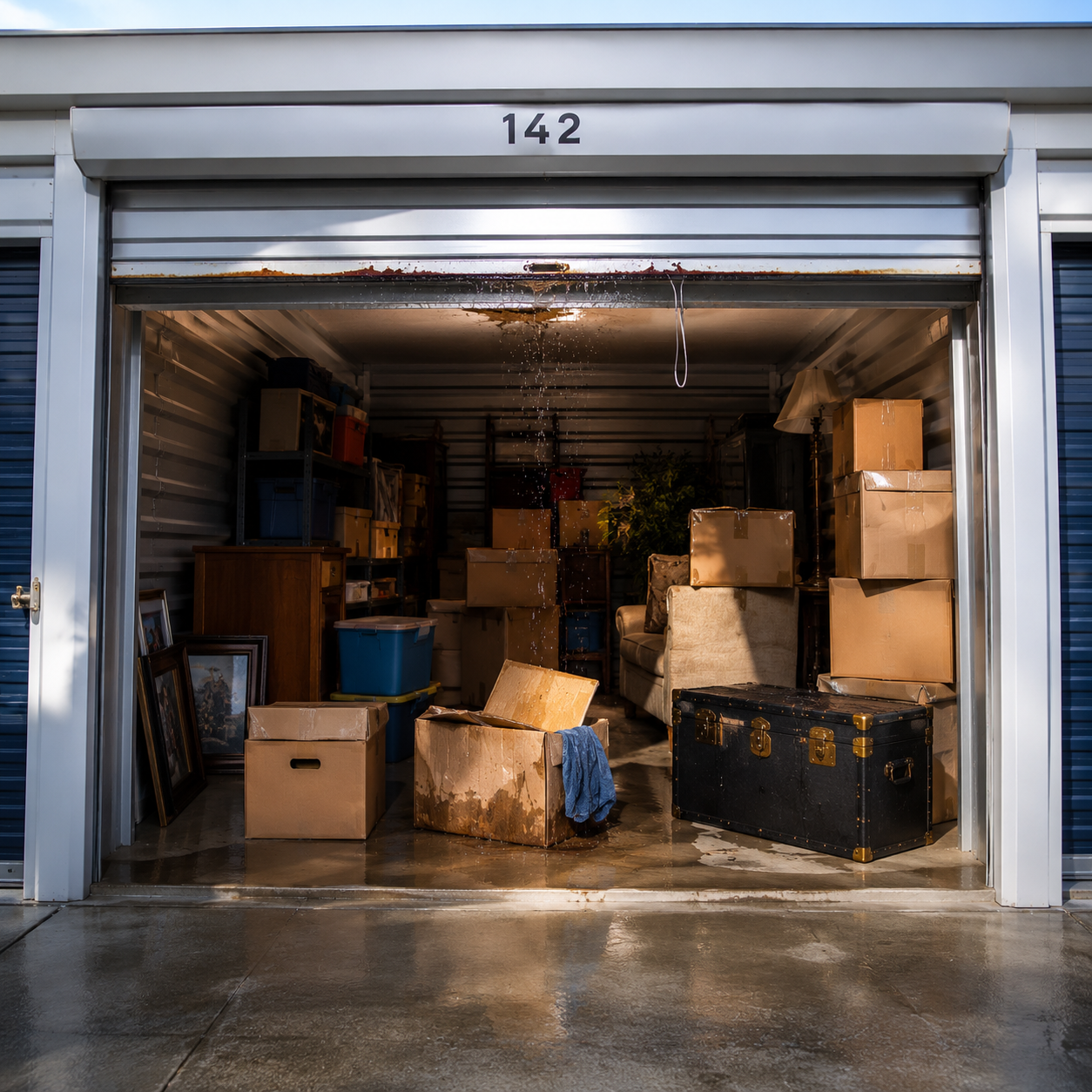
Quick Overview: A small roof leak inside a storage unit can quickly damage furniture, mattresses, electronics, clothing, and boxes without renters noticing right away. This blog explains how water damage spreads, what renters should do after discovering a leak, and why storage unit insurance can help provide added protection during temporary moves and long-term storage situations.
Most people place their belongings into storage expecting everything to stay safe, dry, and exactly the way they left it. But after a heavy storm or hidden roof leak, many renters open their unit and discover damp boxes, stained mattresses, warped furniture, or moisture damage they never expected.
Water damage is one of the most common problems affecting stored belongings, especially during long-term storage. The difficult part is that leaks often go unnoticed until the damage has already spread.
If you are using a storage unit during a move or temporary transition, understanding these risks early can help you better protect your belongings later.
Roof Leaks Usually Start Small
Most storage unit water damage does not begin with a major flood. It usually starts quietly — a small roof crack, a slow drip after heavy rain, or moisture building up during storm season.
At first, everything may look completely normal. But inside the unit, moisture can slowly spread through cardboard boxes, wooden furniture, mattresses, rugs, clothing, electronics, and fabric materials without renters noticing right away.
That is what makes roof leaks so frustrating. By the time people discover the problem, damage and odors may already be spreading across multiple belongings inside the storage unit.
The Worst Part? Most People Discover the Damage Late
Life gets busy during moves. People pack the unit, lock the door, and plan to return later. Weeks pass. Sometimes months. Then after a major storm or weather change, renters finally come back and discover water damage that may have been sitting there for days or even weeks.
That delay often makes the situation worse.
Furniture absorbs moisture longer. Boxes weaken further. Fabric and cushions hold odors deeper. This is why occasional storage unit check-ins matter more than many people realize.
What Should You Do If You Discover a Roof Leak?
The first reaction is usually panic. That is normal. But staying organized can make the situation easier to handle.
If you discover water damage inside your storage unit:
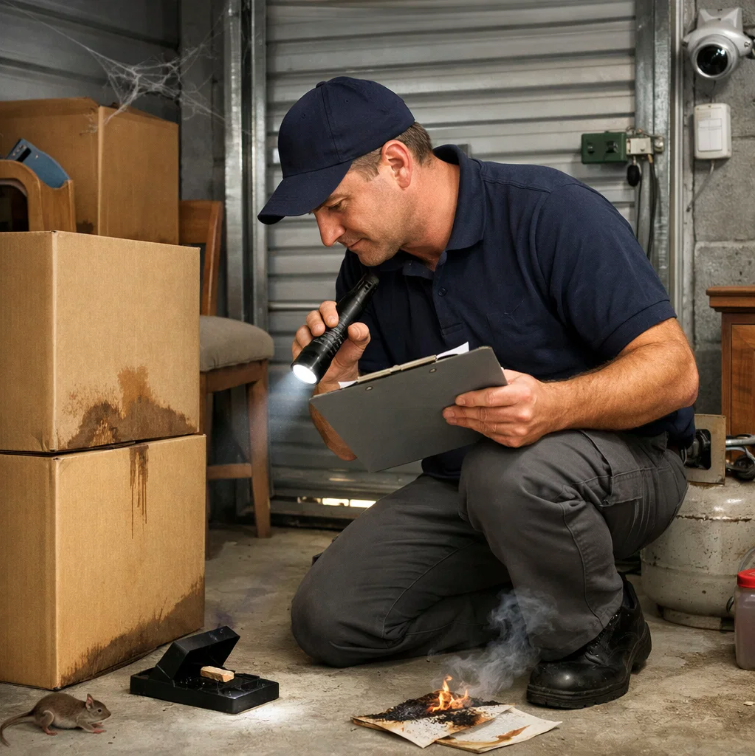
- Take clear photos immediately
- Document all damaged belongings
- Move items away from wet areas if possible
- Notify the storage facility right away
- Save damaged boxes and packing materials
- Review your insurance information
Photos are extremely important during this process. The more documentation you have, the easier it may be to explain the situation during a claim review.
Many renters also find it helpful to create a simple written inventory of damaged belongings while everything is still visible.
Many Renters Believe the Facility Automatically Covers Everything
This is one of the biggest misunderstandings in self-storage. People often assume that if the roof leaked, the storage company will pay for the damage.
Unfortunately, that is not always how storage agreements work. Many storage facilities explain in their rental contracts that renters are responsible for protecting the belongings inside their unit.
That means the facility itself may not automatically reimburse you for damaged furniture, electronics, mattresses, clothing, or household items. And that surprise can become expensive very quickly.
Does Insurance Cover Roof Leak Damage?
One of the first things renters ask after discovering water damage is whether their insurance will actually cover the loss. The answer usually depends on the policy, the cause of the leak, the type of damage, and the coverage limits involved. Some storage unit insurance policies may help cover damage caused by roof leaks or severe weather incidents.
Many renters also wonder whether renters insurance cover storage unit situations involving water damage, while others ask if homeowners insurance cover storage unit belongings during moves or renovations. Coverage can vary widely depending on the provider and policy details.
This confusion is one reason many people choose separate storage unit insurance designed specifically for self-storage situations. SnapNsure focuses on protecting belongings stored inside storage units rather than general property coverage.
Furniture and Mattresses Are Often Hit the Hardest
Soft materials absorb moisture quickly. Couches, mattresses, cushions, rugs, and fabric chairs can become difficult to fully dry after extended water exposure.
Wood furniture also reacts badly to moisture. Tables may warp. Drawers may swell. Wood finishes can bubble or crack after sitting in damp conditions. And once cardboard boxes weaken, the damage often spreads even faster because belongings inside become more exposed.
This is why proper packing matters so much before placing items into storage.
Simple Steps Can Help Reduce Water Damage Risk
No one can completely prevent storms or unexpected building problems. But renters can take smart steps to reduce the chance of serious damage.
Helpful storage habits include:
- Using plastic bins instead of cardboard boxes
- Keeping furniture slightly elevated
- Avoiding overpacking the unit
- Leaving airflow space between items
- Covering furniture with breathable materials
- Checking the unit after severe weather
These small steps may seem simple, but they can make a major difference during long-term storage.
Cheap Storage Deals Can Distract Renters From Bigger Risks
Moving is expensive. People naturally focus on saving money wherever they can. That is why promotional offers like self storage $1 first month attract so much attention during moves and temporary relocations.
And while saving money on storage costs can definitely help, many renters forget to think about protecting the belongings inside the unit itself.
A lower monthly storage price does not reduce the cost of replacing damaged furniture, electronics, clothing, or household items later. That is why protection matters just as much as affordability.
Why Many Renters Choose Storage Unit Insurance
Most people store belongings during already stressful moments in life.
Maybe they are:
- Moving to a new city
- Renovating a home
- Living in temporary housing
- Managing a job relocation
- Downsizing after a life change
- Storing college belongings between semesters
During those moments, the last thing anyone wants is additional stress caused by damaged property.
Storage unit insurance cannot stop storms or roof leaks from happening. But it may help reduce the financial pressure after unexpected damage occurs. That peace of mind matters more than many renters realize.
The Best Time to Prepare Is Before the Storm
Most renters never expect a roof leak until they open the storage unit and discover damp boxes, stained furniture, or water damage. That is why preparation matters before problems happen. Taking photos, packing carefully, and choosing the right protection can make a huge difference later.
While many facility plans offer limited coverage, SnapNsure provides storage unit insurance coverage up to $25,000 for stored belongings. SnapNsure is also licensed nationwide with the same pricing across the country. Policies are underwritten by The Hartford, backed by over 200 years of insurance experience and an A+ rating.
Do not wait until water damage or unexpected loss happens!
Explore SnapNsure’s storage unit insurance options before move-in day and store your belongings with greater confidence.
FAQs
1. Can a roof leak damage items inside a storage unit?
Yes. Even a small roof leak can damage furniture, mattresses, clothing, electronics, boxes, and other stored belongings. Moisture can spread quickly inside closed storage spaces, especially during storms or long periods without checking the unit.
2. What should I do first if I find water damage in my storage unit?
Start by taking clear photos of the damage. Move belongings away from wet areas if possible and notify the storage facility right away. It also helps to make a list of damaged items and review your storage unit insurance policy.
3. Does renters insurance cover storage unit damage?
Some people ask whether renters insurance cover storage unit belongings after water damage or storms. Coverage depends on the policy and provider. Some policies may include limited protection, while others may have restrictions or exclusions.
4. Why do people buy storage unit insurance during temporary moves?
Many people use storage units during stressful life changes like moving, downsizing, renovations, or job relocation. Storage unit insurance helps provide added protection if unexpected damage happens while belongings are in storage.
5. Why is separate storage unit insurance important?
Many storage facilities explain in their rental agreements that renters are responsible for protecting the belongings inside their units. Separate storage unit insurance helps provide added financial protection if unexpected damage or loss happens during storage.