
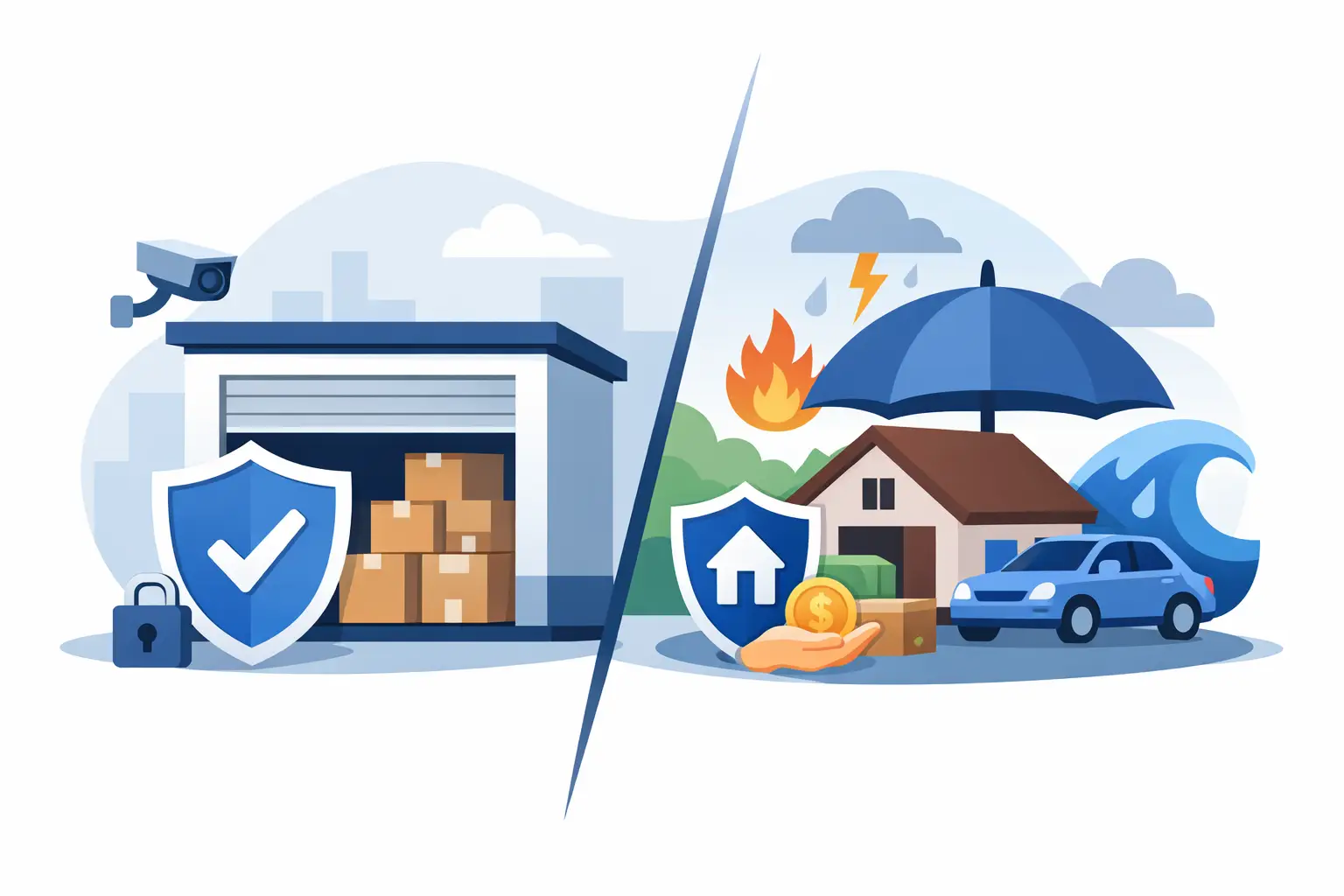
The sales pitch at the storage counter is usually fast. Add the facility’s protection plan, pay a little extra each month, and move on. Simple enough – until you actually compare storage protection plan vs insurance and realize those two things are not the same.
That difference matters when your belongings are sitting in a storage unit or mobile container for weeks, months, or longer. If you are storing furniture during a move, family keepsakes during a renovation, or business property between locations, you are not looking for vague promises. You want to know what is covered, what is excluded, how claims work, and whether you are overpaying for weak protection.
Storage protection plan vs insurance: the basic difference
A storage protection plan is typically offered by a storage operator or storage brand as an in-house program. It may look and feel like insurance because it has a monthly fee and a coverage amount, but it is often structured very differently. In many cases, it is not an insurance policy issued by a licensed insurance company.
Insurance, by contrast, is an actual policy backed by an insurer. That distinction is not just technical. It affects how coverage is written, how claims are handled, and what kinds of losses may be covered.
This is where many customers get tripped up. They hear “protection,” assume they are fully insured, and never see the gaps until there is a loss. If you care about value, the question is not just what the monthly charge is. The real question is what that charge actually buys.
Why storage protection plans often look cheaper than they really are
Storage operators are good at making their plans sound convenient. And convenience does matter. When you are juggling moving trucks, keys, packing tape, and utility shutoffs, clicking one extra box feels easier than shopping around.
But convenience is not the same as value. Many storage-facility protection plans come with narrow terms, lower limits, and more exclusions than customers expect. Some exclude major causes of loss that matter a lot in real life, especially for units exposed to weather risks or mobile storage containers sitting outside.
That means a plan that seems easy on day one can become expensive if it leaves you paying out of pocket later. A lower standard of protection is not a bargain. It is just a smaller promise.
What real insurance typically does better
Real storage contents insurance is built to insure stored belongings, not just check a box at move-in. That usually means broader covered causes of loss, clearer policy language, and stronger financial backing behind the coverage.
For many customers, the biggest advantage is protection against losses that basic plans may limit or exclude. Flood can matter. Named storms can matter. Water damage can matter. If your belongings are in a fixed storage unit in a storm-prone area or packed inside a mobile container during a cross-state move, those risks are not theoretical.
Insurance can also offer higher coverage limits. That is important because people consistently underestimate the value of what they put into storage. A bedroom set, electronics, mattresses, kitchen items, tools, décor, and family records add up fast. If you are storing the contents of an apartment or a large portion of a home, low limits can leave a serious gap.
The hidden problem with exclusions
This is where the fine print starts to matter. A lot.
Protection plans often have exclusions that sound reasonable until they affect your exact situation. Maybe there is limited coverage for water-related damage. Maybe certain weather events are carved out. Maybe there are restrictions for mold, vermin, gradual damage, mysterious disappearance, or certain categories of property.
To be fair, insurance policies have exclusions too. No honest comparison should pretend otherwise. The difference is that a true insurance policy is generally more standardized and transparent, and the best options are designed to provide broader, more meaningful protection for actual storage risks.
In plain English, it comes down to this: if your provider avoids the very losses you are most worried about, that monthly fee is doing a lot less work than you think.
Storage protection plan vs insurance for mobile storage
Mobile storage changes the conversation even more. Containers from PODS-style services, valet storage, and portable moving units often spend time outdoors, in transit, or staged in driveways and lots. That creates a different risk profile than a climate-controlled indoor unit.
A basic facility plan may not be built with those conditions in mind. Insurance that is specifically designed for stored contents, including mobile storage situations, can make much more sense. Broader weather-related protection and higher limits are especially important here because a portable container may hold nearly everything you own for part of a move.
If you are using mobile storage, do not assume any generic “protection” option is enough. Ask the blunt questions. Is this real insurance? Who underwrites it? Are flood and named storm covered? What are the actual limits? If the answers are fuzzy, that is your answer.
Price matters – but not the way most people think
Most customers start with the monthly cost, and that is fair. You should care about price. But a smarter comparison looks at cost against coverage quality.
A lot of in-house storage plans are overpriced for what they deliver. You may pay more and still get less. That is the part many storage operators hope you do not examine too closely.
Real insurance can often cost less per month while offering broader protection and higher limits. That flips the usual assumption on its head. The stronger option is not always the more expensive one.
That is why value-driven shoppers should compare side by side, not just accept the default offering at the facility desk. If one option gives you actual insurance from an A-rated underwriter, stronger covered loss protection, and meaningful savings, the decision gets pretty clear.
What to compare before you say yes
If you are deciding between a storage provider’s plan and insurance, slow down for two minutes and compare the details that actually matter. Look at whether it is a real insurance policy, what per-unit limits are available, whether major weather risks are covered, what categories of property are excluded, and how claims are handled.
Also check whether the policy is month-to-month and easy to buy online. Convenience still matters. It just should not come at the cost of weak protection. The best setup is both simple and strong.
One practical reality: if you already enrolled in a facility plan, you may still be able to switch. Many customers do once they realize they can get better coverage at a lower price. That is not being difficult. That is being smart with your money.
Why the wording matters more than the marketing
“Protection” is a comforting word. It sounds broad. It sounds safe. It sounds like someone has you covered.
But marketing language is not coverage. A monthly fee is not proof of quality. And a line item on your storage bill is not the same thing as a real policy.
This is exactly why the storage protection plan vs insurance question deserves a close look. The names sound similar enough to blur together, but the difference can be the difference between getting paid on a covered loss and finding out too late that your plan was full of limits.
For customers storing belongings during stressful life transitions, that distinction is not minor. It affects peace of mind. It affects out-of-pocket risk. It affects whether the protection you bought actually protects you.
The smarter choice for skeptical shoppers
If you are skeptical of inflated add-ons, good. You should be. Storage companies are in the business of renting space, and their in-house plans are often built for convenience and extra revenue, not maximum customer value.
That does not mean every protection plan is useless, and it does not mean every insurance policy is automatically better. It depends on the actual terms. But if you want broader protection, higher limits, coverage that can include flood and named storm, and pricing that does not punish you for wanting real insurance, the insurance route is often the better play.
SnapNsure was built for exactly that kind of customer – someone who wants real storage insurance, fast online signup, and a better deal than the overpriced plan pushed at move-in.
Before you pay another monthly storage fee for a vague protection add-on, ask one simple question: am I buying a real insurance policy or just a lighter version of one? That answer will tell you a lot about what your belongings are worth to the company selling the coverage – and what they are worth to you.