

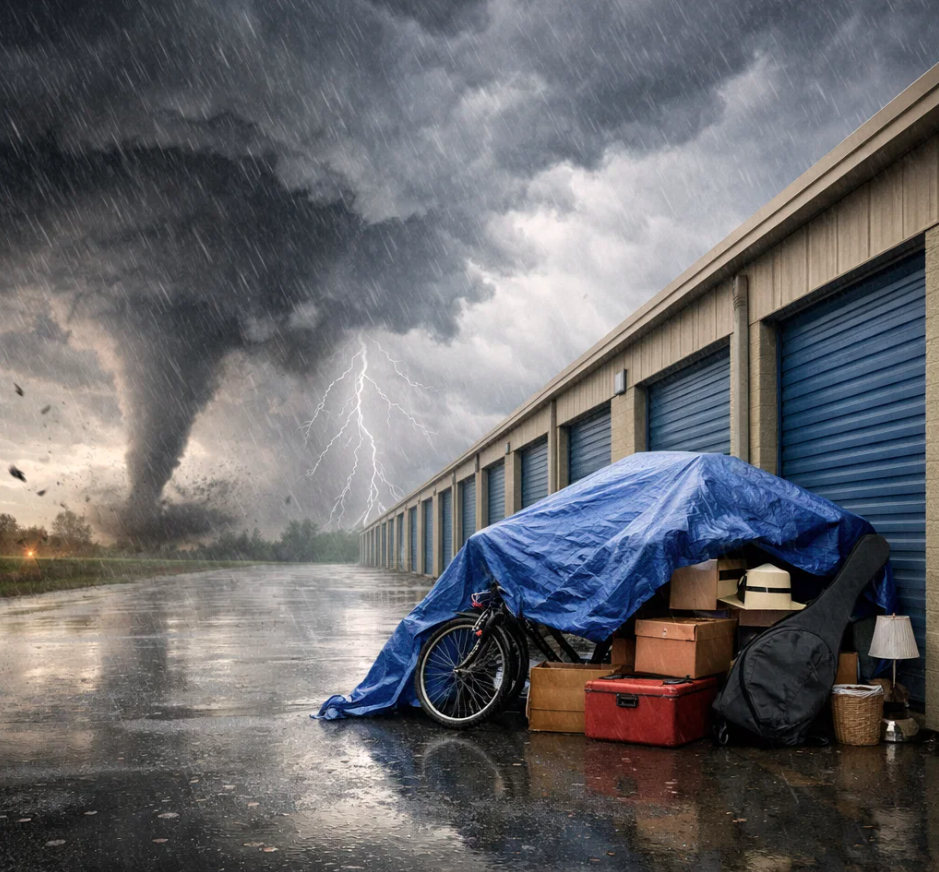
In the U.S., weather-related disasters cause billions of dollars in damage every year. Storms are becoming stronger, more frequent, and less predictable. When severe weather hits, homes aren’t the only places affected. Storage units can also face flooding, roof damage, power outages, and unexpected accidents. If you’re storing belongings, storms can quietly turn into costly problems.
That’s why protecting stored items matters more than ever. Let’s talk about how storms impact storage units, what you can do to reduce risk, and how the right coverage adds peace of mind.
Why Storms Are a Real Risk for Storage Units
It’s easy to assume that once items are inside a storage unit, they’re completely safe. But storms don’t follow rules. Heavy rain can cause water intrusion. High winds can damage roofs. Lightning can trigger fires. Even nearby flooding can affect ground-level units.
Many storage facilities focus on security and access control. They are not designed to fully protect against every weather-related event. This is where storage facility insurance becomes an important layer of protection. It helps cover losses when nature doesn’t cooperate.
Common Storm-Related Storage Issues
Storm damage doesn’t always look dramatic at first. Sometimes it’s slow and hidden.
Water seepage can ruin boxes placed directly on the floor. Humidity after storms can cause warping or corrosion. Fallen debris can damage unit doors or walls. Power outages may affect climate systems, leading to moisture buildup.
These problems often appear weeks later, long after the storm has passed. That delay is what makes preparation so important.
Smart Steps to Reduce Storm Damage
You can’t control the weather, but you can control how you prepare. A few simple habits go a long way.
Start by using sturdy, water-resistant boxes. Avoid thin cardboard. Elevate items using pallets or shelving. Leave small gaps between walls and boxes for airflow. Cover items with breathable fabric instead of plastic, which traps moisture.
Label everything clearly. Keep frequently needed items near the front. And always create a photo inventory before locking the door. Photos make it easier to identify what was stored if damage occurs.
Why Insurance Matters During Storm Season
Even with the best packing, storms can still cause damage. That’s where insurance fills the gap.
Many people assume storage facilities automatically cover losses. Most don’t. Facility policies are limited and often protect the building, not what’s inside your unit. That’s why people look for options like public storage insurance or independent storage coverage.
Insurance designed specifically for storage units helps protect your belongings against covered events such as storm-related damage, fire, or theft. It adds financial protection when unexpected events occur.
Personalized Coverage Makes a Difference
Not all storage needs are the same. Someone storing furniture during a move has different concerns than someone storing seasonal gear. Personalized coverage lets you choose protection that matches your situation.
SnapNsure focuses only on storage unit insurance. Nothing else. Coverage is available nationwide, with the same pricing no matter where you live. That consistency makes planning easier, especially if you move or store items in different states.
Policies are underwritten by The Hartford Insurance Company, a trusted name with over 200 years of experience in insurance solutions. The Hartford holds an A+ rating, which reflects strong financial stability and reliability.
Why Nationwide Licensing and Flat Pricing Matter
Storm risk doesn’t stop at state lines. Hurricanes affect coastal areas. Tornadoes impact central regions. Winter storms hit northern states. Having coverage that works anywhere in the U.S. matters.
SnapNsure is licensed nationwide. Pricing stays the same across all states. There are no location-based surprises. Whether you store items short-term or long-term, you know what to expect.
That simplicity is especially helpful during stressful times, like moving or dealing with storm recovery.
Storm Preparedness Is More Than Insurance
Insurance works best when combined with smart storage habits. Check your unit after major storms if access is allowed. Look for signs of leaks or moisture. Report issues early. Replace damaged boxes quickly to prevent further problems.
Stay informed about local weather alerts. If severe weather is expected, avoid storing items directly on the floor. Small actions before a storm can prevent big headaches later.
Peace of Mind, Even When Weather Turns Wild
Storms don’t check calendars. One heavy downpour or sudden windstorm can turn a quiet storage unit into a costly surprise. That’s why protection matters before the weather changes.
SnapNsure makes it easy to safeguard what you store, without stress or confusion. Coverage is available nationwide, with the same price no matter where you live. You can sign up online in minutes, manage your policy digitally, and keep a photo inventory of your stored items.
Whether storage is short-term or long-term, SnapNsure helps you stay prepared, protected, and confident—no matter what the forecast brings. Store smart. Plan ahead. Rest easy.
Got Questions? Let’s Talk
Q: Why do storms pose a risk to items in storage units?
A: Storms can cause water leaks, flooding, roof damage, and power outages. Even well-built storage facilities can be affected by extreme weather.
Q: Do storage facilities automatically cover storm damage?
A: Most storage facilities do not cover damage to stored items. That’s why separate insurance is often required or strongly recommended.
Q: Can I get storage insurance before storm season starts?
A: Yes. You can purchase coverage at any time, making it easy to prepare before storms or severe weather events.
Q: Do I need insurance for short-term storage during bad weather?
A: Even short-term storage carries risks during storms. Insurance adds protection no matter how long items stay in storage.
Q: How can I reduce storm damage inside my storage unit?
A: Use sturdy boxes, elevate items off the floor, allow airflow, and keep a photo inventory to document stored belongings.


