

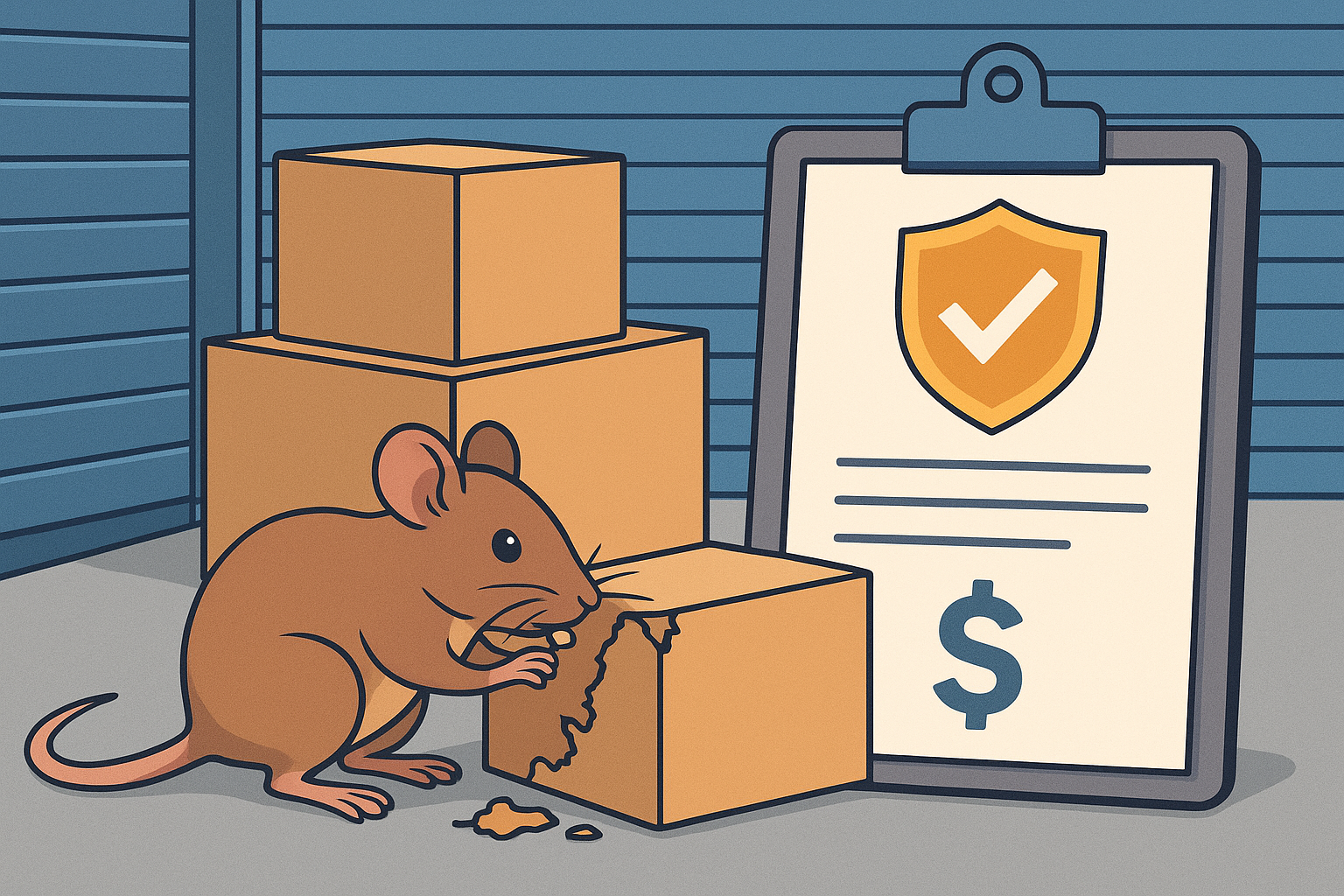
Storage units are used every day for many reasons. People store household items, business stock, seasonal goods, and even important documents. It is a simple way to save space and stay organized.
But there is a hidden risk that many people only discover too late—rodent damage.
Rats and mice can enter storage units without being noticed. They can destroy belongings slowly and quietly. This is why rodent damage insurance for storage units is becoming more important than ever.
This guide explains how rodent damage happens, what most people get wrong, how insurance works, and why SnapNsure offers stronger protection than basic plans.
Why Rodents Are a Growing Storage Problem
Rodents are not random visitors. They look for safe, dark, and quiet spaces. Storage units give them exactly that. They can survive for long periods without being seen. During that time, they can cause serious damage.
Common problems caused by rodents include:
- Chewed cardboard boxes
- Destroyed clothes and fabric
- Damaged wooden furniture
- Ruined paper documents
- Contaminated stored goods
- Electrical wire damage in some cases
Even clean storage facilities are not fully safe from this risk.
How Rodents Get Inside Storage Units
Many people think storage units are completely sealed, but that is not true. Small gaps are often enough for rodents to enter easily. They can slip inside through cracks in walls or floors, gaps under roll-up doors, open spaces around pipes or cables, poor sealing near vents, and weak points in older buildings.
Rodents do not need large openings to get in. Even a gap smaller than a coin is enough for them. Once inside, they can quickly spread between nearby storage units.
Hidden Signs of Rodent Activity
Rodent damage often starts quietly. Many users only notice it after major loss.
Early warning signs include:
- Small droppings near boxes
- Chewed corners of packaging
- Light scratching sounds
- Unusual smells in the unit
- Nest-like shredded paper or cloth
Spotting these early can reduce damage.
Why Rodent Damage Is More Expensive Than It Looks
Rodent damage is not just about broken items. It often creates hidden loss.
1. Visible damage
Items may be torn or broken.
2. Hidden contamination
Even untouched items may be unsafe due to droppings or urine.
3. Total loss situations
Some items cannot be cleaned or repaired. This leads to full replacement costs.
Items often affected are:
- Sofas and mattresses
- Clothing and bedding
- Family photos and documents
- Electronics
- Business inventory
Loss can grow quickly if not controlled.
What Most People Get Wrong About Storage Insurance
A common mistake is assuming all storage insurance covers everything.
But most basic policies only include:
- Fire damage
- Theft
- Natural disasters
They often exclude:
- Rodent damage
- Pest infestations
- Contamination issues
- Long-term storage deterioration
This is why checking policy details is very important.
What Is Rodent Damage Insurance for Storage Units?
Rodent damage insurance for storage units is a specific type of protection that covers losses caused by rodents. It helps when standard insurance does not respond to pest-related damage.
It can help cover:
- Repair or replacement of damaged goods
- Cleaning or decontamination costs
- Partial reimbursement for affected items
- Financial loss from rodent activity
It fills a major gap in standard coverage.
Real-Life Storage Risk Scenarios
To understand why this matters, here are common real situations:
Scenario 1: Long-term storage damage
A person stores furniture for one year. Rodents enter unnoticed. By the time the unit is opened, most items are damaged or contaminated.
Scenario 2: Business inventory loss
A small business stores packaged goods. Rodents chew through packaging, making products unsellable.
Scenario 3: Document damage
Important papers and files are stored. Rodents destroy and contaminate them, causing permanent loss.
These situations are more common than most people think.
Why Rodents Choose Storage Units
Rodents are attracted to storage spaces for simple reasons:
- Quiet environment
- Low human activity
- Warm shelter
- Easy nesting materials (boxes, paper, fabric)
Once they find a safe place, they stay and multiply quickly.
Water Damage: The Second Big Risk
Along with rodents, water damage is another major threat. That is why many users also look for water damage insurance for storage units.
Water damage can come from:
- Heavy rainfall or flooding
- Pipe leaks
- Roof damage
- Humidity buildup
Even small leaks can slowly destroy stored items. Wood, paper, and fabric are especially affected.
Why Combined Protection Is Better
Rodent damage and water damage often happen in different ways, but both can cause major loss.
Using both protections together gives stronger safety.
Combined coverage helps protect against:
- Pest-related destruction
- Moisture and leaks
- Long-term storage risks
- Unexpected environmental damage
This is especially useful for:
- Long-term storage users
- Families storing household goods
- Business owners
- High-value item storage
How SnapNsure Is Different
SnapNsure is designed to provide stronger and more reliable storage protection. It is underwritten by The Hartford Insurance Company, which has been providing insurance solutions for over 200 years and holds an A+ rating for financial strength. This means policies are backed by one of the most trusted insurance providers in the industry.
Nationwide Coverage with Simple Pricing
SnapNsure is licensed nationwide, which makes it available across the United States.
Key advantages:
- Same pricing across all states
- No location-based price changes
- Simple and transparent structure
There are no hidden regional costs.
No Extra Charges for Climate-Controlled Units
Many insurance providers increase prices for climate-controlled storage units. SnapNsure does NOT do this. We do not charge higher premiums for climate-controlled units, making pricing fair and simple for all users.
Higher Coverage Limits Compared to Standard Plans
Most storage insurance policies usually provide coverage between $2,000 to $5,000 per unit, which may not be enough for high-value belongings. In comparison, SnapNsure offers coverage up to $25,000 per unit, giving users much stronger financial protection.
Why Higher Coverage Actually Matters
Many people underestimate how quickly storage losses add up.
Example:
- Sofa set: $2,000–$5,000
- Electronics: $1,000–$3,000
- Clothing and bedding: $500–$2,000
- Documents or collectibles: often irreplaceable
Even small rodent damage can exceed low insurance limits. This is why higher coverage matters in real situations.
Simple Prevention Tips
Insurance helps, but prevention also reduces risk.
1. Use plastic storage bins. Rodents cannot easily chew them.
2. Keep items elevated. Use shelves or pallets.
3. Avoid food storage. Food attracts rodents quickly.
4. Visit your unit regularly. Early checks help prevent large damage.
Mistakes People Make in Storage Units
Here are common mistakes users make:
- Using weak cardboard boxes
- Storing food items unknowingly
- Not sealing packages properly
- Ignoring small signs of pests
- Leaving units unchecked for months
Avoiding these mistakes reduces risk.
Smarter Storage Protection Starts Here
Storage units are useful, but they do come with real risks. Rodents can quietly chew through boxes and damage valuables, while water leaks can slowly ruin stored items over time. This is why rodent damage insurance for storage units is so important. It helps protect against sudden, costly loss and reduces financial stress.
SnapNsure offers stronger protection backed by The Hartford Insurance Company, an A+ rated insurer with over 200 years of experience. It also provides nationwide licensing, the same pricing everywhere, no extra charges for climate-controlled units, and coverage up to $25,000 per unit.
Simple protection today can help avoid big losses tomorrow and keep your storage worry-free.
FAQs
1. Does standard storage insurance cover rodent damage?
Most basic storage insurance plans do not include rodent or pest damage. That is why many users choose specialized coverage like rodent damage insurance for storage units to avoid unexpected financial loss.
2. Why is rodent damage a common risk in storage units?
Rodents can enter through small gaps in doors, walls, or vents. Storage units are quiet and undisturbed, which makes them an easy place for rodents to nest and damage stored items over time.
3. What is water damage insurance for storage units?
Water damage insurance for storage units helps protect your belongings from loss caused by leaks, floods, burst pipes, or moisture buildup. It is important because water can slowly destroy furniture, documents, and electronics.
4. Can rodent and water damage happen in the same storage unit?
Yes, both risks can happen in the same unit. Rodents may enter through gaps, while water damage can occur from leaks or humidity. That is why combined protection is often recommended.
5. What makes SnapNsure different from other storage insurance providers?
SnapNsure offers higher protection with coverage up to $25,000 per unit, nationwide licensing, and consistent pricing. It is also backed by The Hartford Insurance Company, an A+ rated insurer with over 200 years of experience.
6. What is the typical coverage limit for storage insurance?
Most storage insurance policies offer coverage between $2,000 and $5,000 per unit. SnapNsure offers significantly higher protection, with coverage up to $25,000 per unit.
7. How can I reduce rodent damage in a storage unit?
You can reduce risk by using sealed plastic containers, avoiding food storage, keeping items elevated, and checking your unit regularly for signs of rodents.
8. What kind of damage do rodents cause in storage units?
Rodents can chew boxes, damage furniture, ruin clothes, and contaminate items with droppings or urine. Even small infestations can lead to major losses over time.
9. Why do rodents enter storage facilities?
Rodents enter storage units in search of food, warmth, and shelter. Poor sealing, small gaps, and quiet environments make storage spaces an easy target.
10. Is SnapNsure available nationwide?
Yes, SnapNsure is licensed nationwide, meaning customers across the country can access the same insurance coverage and pricing.
